



WSDOT Helps Provide Job Training to Homeless Individuals
The Washington State Department of Transportation is celebrating the success of a program geared toward finding housing and even jobs for homeless individuals living in state roadway rights-of-way.
[Above photo by the WSDOT]
Through Washington State’s Encampment Resolution Program, WSDOT partners with service providers and the Washington State Department of Commerce in King, Pierce, Thurston, Snohomish, and Spokane counties to help those groups of unhoused individuals find housing and participate in job skills training to set them up for long-term success.
The homeless individuals participating in this initiative’s job readiness program receive certifications in Occupational Safety and Health Administration or OSHA regulations, First Aid, and cardiopulmonary resuscitation or CPR emergency training. Students are also trained in forklift operations and flagging for traffic control operations; training that allows them to apply for construction or road work jobs. The training is an important step in connecting graduates to potential employers, including us or other local jurisdictions, WSDOT said.
Those construction-focused training programs – which are provided by i2 strategies – are paid for WSDOT as part of the overall Encampment Resolution Program efforts, including funding through the WSDOT’s Office of Equity and Civil Rights.
The agency stressed in a blog post that this program “isn’t for everyone” living in an encampment; participants are assessed based on needs and readiness for job training. But the people who have graduated from this program say it’s invaluable.
“This (program) taught me I have more to offer than what I am giving myself credit for,” said Joshua Price, who graduated from the Pre-Employment Preparation Program after living in the “Camp Hope” encampment in Spokane. He learned not only job-specific skills but ways to be more stable and successful in other parts of his life. “I gained knowledge and refocused on bettering myself,” he said.
Price – who now works in construction – is now living in emergency housing in Spokane. With a job and place to live, Price is now focused on improving his relationship with his daughter. “This class opened my eyes and challenged me for better outcomes,” he said.
In addition to job-specific skills, the program helps students address barriers to employment. Examples include:
- Driver licenses – both written and driving testing or help reissuing lost cards;
- Obtaining General Educational Development or GED transcripts/documentation;
- Addressing mental or behavioral health challenges;
- Partnering with local pre-apprenticeship and training programs for employment preparation certificates;
- Employment preparation training such as workplace expectations, communication skills, resume workshops, and interview preparation, among other “soft” skills;
- Case management support, including tips on how be successful after finding employment.
Other state departments of transportation are involved in other non-traditional ways of helping their communities through workforce training programs.
For example, a recent video detailed how the Kentucky Transportation Cabinet has helped former prison inmates get hands-on crew experience in landscaping, graffiti removal, rest area cleaning, and litter pickups as part of a job skills program aimed at putting them on the path to gainful employment.
Since 2019, the agency has partnered with the Center for Employment Opportunities in its District 5 and District 6 regions to provide employment services exclusively to individuals who have recently returned home from incarceration.
Utah DOT Installing New Segment of Wildlife Fencing
The Utah Department of Transportation is currently installing nearly three miles of wildlife fencing along the outside perimeter of Echo Junction where I-84 and I-80 meet, north of the Echo Reservoir in Summit County.
[Above photo by Utah DOT]
The agency said this new stretch of fencing – which should be fully installed by November – will help funnel wildlife to a nearby freeway under crossing.
“This is a major hotspot for wildlife,” said Matt Howard, Utah DOT’s natural resources manager, in a statement. “We’re focused on reducing the number of wildlife-vehicle collisions, and this new fencing will save the lives both of humans on the road and wildlife nearby.”
[Editor’s note: The video below from the New Mexico Department of Transportation explains the role wildlife crossings play in the protection both animals and the traveling public.]
The agency – which manages over 60 wildlife crossing statewide – said the total cost for this phase of this fencing project is $2.3 million, with this stretch of fencing partially funded by nearly $350,000 in grants from the National Fish and Wildlife Foundation and other stakeholders, including support from the Utah Division of Wildlife Resources or DWR and several local conservation organizations.
“We are so grateful to partners like Utah DOT who are helping improve wildlife connectivity and make safer migrations,” noted Makeda Hanson, DWR’s Utah wildlife migration initiative coordinator. “Roads can be a major barrier to wildlife movement. However some individual animals or herds will attempt to cross roads even when high traffic occurs in a particular area.”
[Editor’s note: A research document released in July 2022 by an international pool funded study led by the Nevada Department of Transportation provides an “authoritative review” of the most effective measures to reduce animal-vehicle collisions, improve motorist safety, and build safer wildlife crossings.]
Hanson emphasized that wildlife fencing plays an important role in keeping wildlife safe by directing them to safer crossing locations, like large culverts and underpasses. “We use many tools to ensure wildlife can still make important migrations between different habitat areas,” Hanson said.
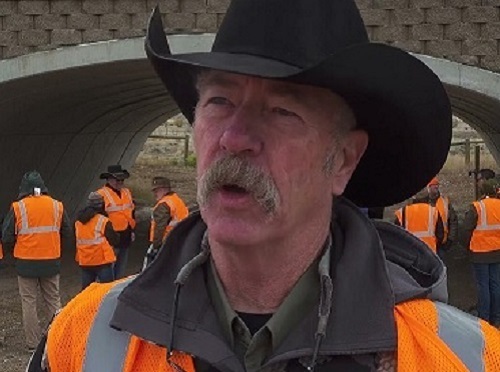
Other state departments of transportation are also engaged in efforts to prevent wildlife-vehicle collisions.
For example, in November 2023, the Wyoming Department of Transportation completed wildlife crossings built as part of its $15.1 million Dry Piney project.
The Dry Piney project – a joint effort between the Wyoming Game and Fish Department and the Wyoming DOT – includes nine underpasses and 16.7 miles of eight foot-high fencing on both sides of Highway 189 in the western part of the state to protect big game animals, primarily mule deer.
More broadly, in December 2023, the Federal Highway Administration issued $110 million in grants to 19 wildlife crossing projects in 17 states, including four projects overseen by Native American tribes.
FHWA noted that the time that its data indicates there are more than one million wildlife vehicle collisions in the United States annually, with wildlife-vehicle collisions involving large animals resulting in approximately 200 human fatalities and 26,000 injuries to drivers and their passengers each year.
Those collisions also cost the public more than $10 billion annually, according to FHWA; a figure that includes the total economic costs resulting from wildlife crashes, such as loss of income, medical costs, property damage, and more.
Environmental News Highlights – September 25, 2024
Appalachia Airports Look Forward to an Electric Future
State departments of transportation in Kentucky, Ohio, and North Carolina are participating in a year-long study on how to re-equip general aviation airports in Appalachia to accommodate electric aircraft.
[Above photo by NCDOT]
This study will focus on what utilities and charging infrastructure 36 airports will need to serve a new generation of electric aircraft.
The study will also create financing and implementation models for general aviation airports across Appalachia; a 13-state rural region from north Mississippi to the southern tier of New York State.
Ohio University and North Carolina State University are spearheading the $500,000 study; funded by the government-funded Appalachian Regional Commission, an economic development entity. The study will include 18 Kentucky airports, 14 in Ohio, and four in North Carolina.
Electric aircraft are more generally categorized as Advanced Air Mobility or AAM systems and include remote-piloted, autonomous, and vertical take-off and landing or VTOL aircraft. Generally, they are less expensive and more versatile than traditional aircraft, and are capable of package deliveries, ambulance service, and even firefighting.
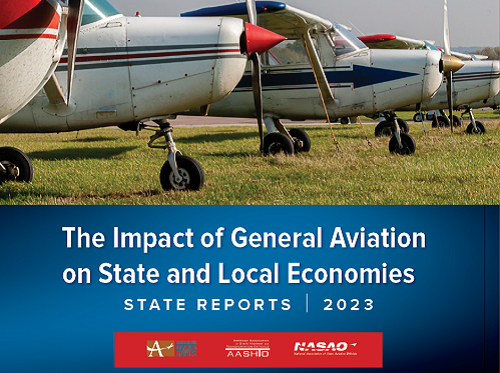
[Editor’s note: In April 2023, the American Association of State Highway and Transportation Officials published a report analyzing the impact of general aviation on state and local economies across the country. That report – officially entitled “The Impact of General Aviation on State and Local Economies—State Reports 2023” – is a joint effort between AASHTO, the Alliance for Aviation Across America, and the National Association of State Aviation Officials.]
Appalachia is home to more than 200 airfields, most of which focus on moving goods rather than people. As the aviation industry further develops the potential of electronic drones and their larger, piloted cousins, these airports must adapt if they hope to thrive, noted Project Director Brent Lane in news release from Ohio University.
The potential economic opportunities are significant as AAM technology tends to be less noisy and more economical, flexible, and sustainable than traditional aircraft, he added. Further, the less crowded airspace of Appalachia is ideal for the rigorous testing required – but to compete in this market, sufficient charging capacity is required, Lane said.
“We will identify the infrastructure investments needed to bring those airports into the 21st Century of sustainable electric aviation,” he explained. “We want Appalachia to be a leader in this industry.”
The study also is seen as a step to spur economic development in the rural region, which often struggles to achieve socioeconomic parity with the rest of the country.
In a news release, Kentucky Governor Andy Beshear (D) touted the commonwealth as “the electric vehicle battery production capital of the world, and by participating in this project, we’re working to become a leader in the aircraft industry of the future.”
Becca Gallas, director of aviation for the North Carolina Department of Transportation, said in a news release that the study is “a forward-thinking approach” that aligns with the state’s Advanced Transportation Mobility Strategic Plan.
“This project exemplifies our commitment to innovation, economic development and sustainable infrastructure,” Gallas added.
At least one other state DOT – in this case, the Colorado Department of Transportation – is in the middle of a similar study of how to accommodate aircraft that use alternative fuels, including electricity, at its airports.
Work Progressing on WSDOT ‘Green’ Ferry Overhaul
The Washington Department of Transportation reports that work is progressing on the propulsion system conversion and refurbishment of the agency’s Wenatchee ferry; an overhaul that should be completed by the summer of 2025.
[Above photo by WSDOT]
Washington State Ferries (WSF) – a division of WSDOT – awarded a $150 million contract to shipbuilding firm Vigor in 2023 to convert its three Jumbo Mark II class ferries to hybrid-electric power along with other upgrades, ensuring the vessels remain reliable for their 60-year lifespans.
Those three ferries – the Wenatchee, Tacoma, and Puyallup – were originally built in 1998, 1997, and 1999, respectively.
With a capacity for 202 vehicles, WSDOT said the Wenatchee is currently the largest passenger ferry in the U.S. undergoing an “electro-propulsion” refit.
“There are no issues with the technology itself, but as is common with major vessel retrofits, we have faced some challenges in working this new technology into the existing vessel,” noted Matt von Ruden, administrator for the WSF System Electrification Program, in a statement.
“Working with Vigor, we have largely tackled these issues and are now preparing for system commissioning. We’re also applying our lessons learned for the subsequent vessels,” he said.
Major work completed to date on Wenatchee includes removal of two propulsion diesel generators, installation of electric power conversion and distribution equipment, upgrades to obsolete propulsion control equipment, reconfiguration of piping systems, and build-out of two new battery rooms.
Ongoing work includes installation of thousands of feet of electric and fiber optic cable and, from there, the battery modules will be installed, and crews will begin to bring the ferry back to life, WSDOT said.
[Editor’s note: The Texas Department of Transportation recently released a “behind the scenes” video about Captain David Askew, a 12-year agency veteran who currently serves as ferry deck supervisor in Port Aransas, TX.]
The agency stressed that this overall “commissioning” process is a “highly structured sequence” of energizing system components and testing them to ensure they operate as designed.
After Vigor’s work is complete, WSF said it will need approximately four weeks to put Wenatchee through its paces with additional system checks and sea trials, as well as training for the vessel crews. The Tacoma conversion will not begin until the Wenatchee returns to service.
“The benefits of this program are substantial,” said von Ruden. “When these propulsion upgrades are complete, the Wenatchee will emerge with improved reliability, increased efficiency and reduced emissions.”
Other state departments of transportation are working to deploy “greener” ferry boast as well.
For example, in March, TxDOT put its newest maritime ferry into service on the Galveston-to-Port Bolivar route; naming the new vessel after a pioneering figure in Texas transportation infrastructure: Esperanza “Hope” Andrade.
The new $33 million vessel, which measures 293 feet long, is one of seven in the Galveston ferry fleet and the newest addition in over a decade. The new ferry also features “cleaner” propulsion technology, TxDOT said at the time, marrying together a diesel-electric transmission and lithium-ion battery to reduce diesel engine emissions while improving fuel-efficiency.
Maryland DOT Developing ‘Landmark’ State Trail Plan
The Maryland Department of Transportation is currently developing what it calls a “landmark action plan” to improve and expand trail connectivity statewide. The agency said this plan will guide future investment in shared-use paths, helping to advance efforts to reduce greenhouse gas emissions, boost alternatives to driving, and prioritize the safety of all road users across the transportation network.
[Above photo by Maryland DOT]
Updated for the first time in more than a decade, the agency said its revised “Maryland State Transportation Trails Strategic Plan” should be completed by 2025. It aims to align with existing bicycle and pedestrian efforts such as the new department-wide “Complete Streets Policy” and the data-driven “Pedestrian Safety Action Plan” formulated by the Maryland State Highway Administration; a division of Maryland DOT.
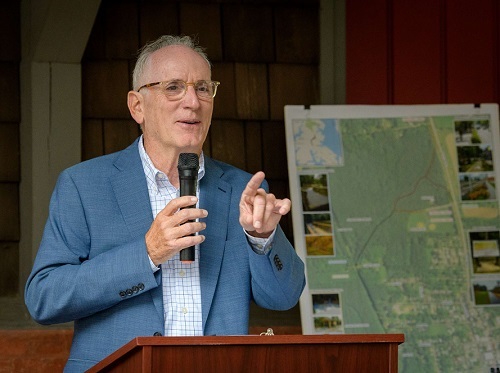
The agency noted that this new trails initiative, which will “leverage both state and federal dollars,” also aims to build on the “foundation” created by Maryland DOT’s 2009 Trails Plan and the 2050 Bicycle and Pedestrian Master Plan to meet state sustainability goals and address growing demand for an integrated transportation trail system.
“Shared-use paths are a critical piece of Maryland’s transportation system and contribute to the Maryland Department of Transportation’s goals of enhancing accessibility and connectivity, growing the economy, and expanding safe routes for pedestrians and bicyclists,” said Maryland DOT Secretary Paul Wiedefeld in a statement.
[Editor’s note: Maryland Governor Wes Moore (D) recently announced $16 million in funding for 36 bicycle, pedestrian, and trail projects statewide. That includes $13.9 million in federal funding awarded through the state’s Transportation Alternatives Program and Recreational Trails Program, along with $2.1 million via Maryland DOT’s Kim Lamphier Bikeways Network Program.]
This fall, the Maryland DOT said it will begin taking an inventory of the existing trail infrastructure, identifying the shared-use path network, missing trail links, and unused rail corridors that can be turned into shared-used paths as part of its strategic trails plan.
Other state departments of transportation are engaged in similar trail network expansion plans.
For example, in May, the Utah Department of Transportation issued nearly $95 million to support 19 trail projects – including the construction of new paved trails as well as funding for planning efforts to fill in existing trail gaps – as part of creating a regional “Utah Trail Network” across the state.
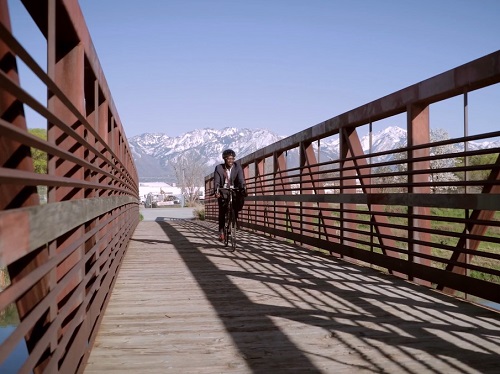
The agency said that it collaborated with communities statewide regarding the allocation of that funding – approved by the Utah Transportation Commission – to select the key projects for this statewide trail network.
Of the projects selected for that inaugural round of funding, Utah DOT said 13 are considered construction ready and could get underway as soon as 2025 – depending on contractor schedules, supply availability and other factors like weather.
Additionally, the Texas Department of Transportation is developing a Statewide Active Transportation Plan or SATP to gather recommendations for improving bicycling, walking, and rolling conditions across the Lone Star state.
TxDOT noted the SATP is being integrated with its other long-range mobility plans to help it maintain a safe, accessible, connected, and fully integrated multimodal transportation system for the future, since the population of Texas is expected to grow by 28 percent by 2050.
FHWA Seeking Information on EV Charging Systems
The Federal Highway Administration, along with the Joint Office of Energy and Transportation, recently issued a Request for Information or RFI regarding electric vehicle (EV) charging technologies and infrastructure needs for medium- and heavy-duty vehicles.
[Above image by FHWA]
That RFI seeks input in four areas to support medium- and heavy-duty electric vehicles: 1) unique EV charger and station needs; 2) vehicle charging patterns; 3) charging technology and standardization, and; 4) workforce, supply chain, and manufacturing to support charging of medium- and heavy-duty battery EVs in federal vehicle classes four through eight, which include delivery vans, school buses, semi-tractor trucks, fire trucks, dump trucks, and tour buses.
The agency said in a statement that this RFI will help inform how the federal government, including the Environmental Protection Agency and other agencies, can support the development and timely build-out of a national EV charging network that balances the needs of rapidly evolving technology and infrastructure investments in freight and a multimodal transportation system.
In the National Blueprint for Decarbonization, the FHWA said the Biden administration aims to have 30 percent of new medium- and heavy-duty vehicle sales in the United States be zero-emissions by 2030, and 100 percent by 2040.
Comments must be received on or before November 12, FHWA said, though late-filed comments will be considered to the extent practicable.
Environmental News Highlights – September 18, 2024
MassDOT Taps Electric Trains for Commuter Rail Line
The Massachusetts Bay Transportation Authority – a division of Massachusetts Department of Transportation – recently signed off on a $54 million plan to introduce battery-electric multiple unit or BEMU trains to the Fairmount Commuter Rail Line. The first of those BEMU trains are scheduled to go into operation in early 2028.
[Above photo by MassDOT]
Keolis Commuter Services, the company that operates MBTA commuter rail lines, will begin the design and procurement process with the goal of delivering enough BEMU trains to operate 20-minute train service along the line. At just over nine miles long, the Fairmount line is the shortest of the 12 commuter rail lines, serving 3,200 passengers a day.
In a statement, MassDOT Secretary Monica Tibbits-Nutt called the move to BEMU trains “a milestone moment” as the transit agency “prepares to begin operating the first of what will be dozens” of new BEMU trains. MBTA serves more than 100,000 rail commuters a week.
MassDOT pointed out that moving the entire Fairmount line from diesel to battery-electric service will save 1.6 million gallons of fuel and mitigate 17,700 tons of carbon dioxide a year. Besides emitting less air pollution, the BEMU trains will be faster, quieter, smoother, and will give passengers more space for a “modernized commuting experience,” the agency said.
[Editor’s note: In April, the Nevada Department of Transportation hosted a groundbreaking event for the Brightline West High-Speed Rail Project; a 218-mile all-electric rail line that will operate between Las Vegas and Rancho Cucamonga, CA. The agency received $3 billion in funding from the USDOT’s Federal-State Partnership for Intercity Passenger Rail Grant Program in December 2023 to help build this Brightline West electric rail line, which the company expects will open in 2028. That grant brings the total federal support for project up to $6.5 billion in grants and financing.]
Commute times should be cut from 30 minutes to about 20 minutes because the electric trains can accelerate faster out of each of the nine stations along the route, MassDOT noted. People who live near the commuter line, yards, and maintenance facility should experience less noise and vibration from the new trains, according to the release.
BEMU trains are powered by on-board batteries that are recharged by overhead catenary wires. Instead of locomotives pulling passenger cars, the batteries and motors will be integrated into four-car fixed sets. Once the design is finalized, engineers can determine seating capacities, which will be one factor in deciding exactly how many trains will be needed.
Eventually, MassDOT and MBTA want to convert the entire commuter rail system to electric trains, but it’s not financially feasible to do that right now, according to MBTA General Manager Phillip Eng.
“Understanding that billions of dollars are needed to fully electrify our entire system, we are proud to find a way to bring electrification to this corridor sooner within available fund sources,” Eng said. “This work will help inform us as we strive to improve and decarbonize our service on all of our regional rail network.”