



‘The Stream’ Podcast Talks State DOT Emergency Response
The latest episode of the “The Stream by AASHTO” podcast features Shawn Wilson, Sr. (above) – vice president-national highway business line leader for transportation and infrastructure at WSP – discussing how state departments of transportation across the country are working on improving cooperative strategies to for disaster response and recovery operations.
[Above photo by AASHTO]
This podcast series is part of the AASHTO Environmental Management technical service program operated by the American Association of State Highway and Transportation Officials. It explores a wide array of environmental topics that affect state departments of transportation and the infrastructure programs they oversee.
In this podcast episode, Wilson – previously secretary of the Louisiana Department of Transportation and Development and a former AASHTO president – discussed a recent workshop WSP held in Puerto Rico and a knowledge session he moderated at the 2025 AASHTO Washington Briefing held in Washington, D.C., which both focused on helping state DOTs develop better “mutual aid” frameworks.
“It’s about having prepared ‘mission packages’ so state DOTs can help each other respond to any number of disasters, man-made or natural, such as earthquakes, hurricanes, floods, and wildfires, among others,” he said on the podcast.
Wilson noted such “mission package” requests could be used to address specific issues such as restoring water or electric service, debris cleanup, or evacuation – with those packages including detailed lists of the tools and equipment needed, the number of people required and their specifical skill sets, plus how to house and feed them.
Creating such packages “forces us to think through how to effectively manage staff and resources, develop response plans, and be fiscally responsible as well,” he explained. “And it is not just about state-to-state partnerships, but also how to work with the private sector quickly to get things done quickly – working with fabricators to accelerate delivery of materials, etc.”
Wilson added that the “beauty of AASHTO,” in relation to those efforts, is that the organization “allows us to take all the lessons learned from this process and spread them across the country. We can bring real life examples of what can happen and the best practices developed as a result to all state DOTs.”
To listen to the full podcast, click here.
Kansas DOT Issues ‘Safe Routes to School’ Plan
The Kansas Department of Transportation recently published its first ‘Safe Routes to School’ or SRTS Strategic Action Plan; a blueprint for helping more students statewide walk, bike, and roll to and from school through public awareness campaigns, municipal partnerships, and community tool kits.
[Above image by Kansas DOT]
That plan includes broad goals of reaching more students, creating more partnerships, and supporting communities in planning and infrastructure needs. It also spells out specific strategies, from providing educational materials and developing a statewide crossing guard study, to producing planning and engineering toolkits for communities to use, the agency said.
“This plan details our commitment to providing resources that help support safe communities for students and families of all backgrounds and abilities,” Ann Katt, Kansas DOT’s SRTS coordinator, said in a news release.
Children who walk, bike, or roll to school tend to be physically and mentally healthier and perform better in school, Kansas DOT noted.
The agency added that its SRTS program also saves families money, improves traffic safety and air quality, and increases personal safety – doubly important in rural states such as Kansas, where many small communities lack the transportation options of suburban or urban areas.
Kansas also has a great number of “frontier communities,” which are defined as rural areas with 12 to 20 persons per square mile that are 30-90 minutes travel time to a service or market.
Fewer students walk, bike or roll to school today than 50 or 60 years ago, Kansas DOT pointed out, especially in rural communities. “The SRTS program works to reverse this trend through a holistic set of strategies commonly known as the Es: education, encouragement, engineering, engagement, evaluation, equity, and enforcement,” the agency’s SRTS plan noted.
Kansas DOT’s SRTS program has been around since 2005, but its scope narrowed after it was discontinued as a federally funded stand-alone program in 2012.
While the Infrastructure Investment and Jobs Act of 2021 did not restore SRTS as a stand-alone program, it did emphasize SRTS in other bill elements, prompting Kansas DOT and other state departments of transportation? – including Oregon, Ohio, and Massachusetts – to take a second look at their state programs.
In 2023, Kansas DOT rebooted the program, hiring a full-time SRTS coordinator and a consultant to help with planning. Then the department recruited advisory committee members from the active transportation community, schools, law enforcement, and equity and safety advocates.
In the second half of 2024, the agency led a “stakeholder involvement process” that included a best practice review, statewide online survey, focus groups, and advisory committee workshops. From the data gathered through that process, the department built its Strategic Action Plan.
On the funding side, Kansas DOT awards state-funded “Planning and Programming” grants to help communities create SRTS plans. Through funding via the federal Transportation Alternatives Program, Kansas DOT provides technical resources and funding for SRTS infrastructure projects such as walking paths, biking lanes, and sidewalks.
Since revitalizing the program, Kansas DOT has awarded “Planning and Programming” grant funding to 11 communities for planning and consultant services to start SRTS programs. In 2024, the agency funded at least $18 million in active transportation infrastructure projects near schools and for specific SRTS programs.
NCDOT Forms ‘Page Program’ for High Schoolers
In March, the North Carolina Department of Transportation plans to hold a week-long “deep dive” program for high schoolers to learn more about careers in state government and the transportation industry.
[Above photo by NCDOT]
The agency’s new Garrett A. Morgan Page Program – named after the inventor and original patent holder for the three-position traffic signal – runs from March 24-28 and is designed for high school juniors and seniors attending state Title I schools.
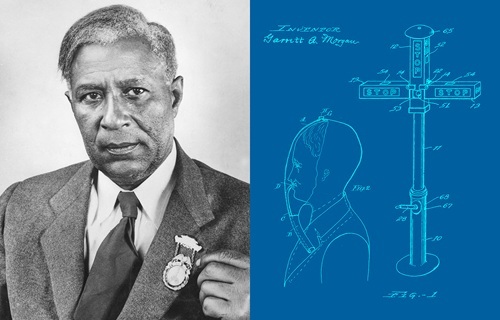
Title I is a federally funded program that provides financial assistance and support to schools with high numbers of students from low-income families, NCDOT noted.
The agency added that participants in this program will engage with NCDOT professionals, enjoy hands-on activities, ride a state train, and learn about transportation planning, environmental analysis, public transit and public safety.
“[We are] committed to fostering the next generation of leaders in transportation,” said Christy Dunston, director of the NCDOT’s Office of Historically Black Colleges and Universities or HBCU Outreach, in a statement.
“The Garrett A. Morgan Page Program not only honors an important figure in our history but also empowers students by providing them with valuable insights and experiences that can shape their future careers,” Dunston said.
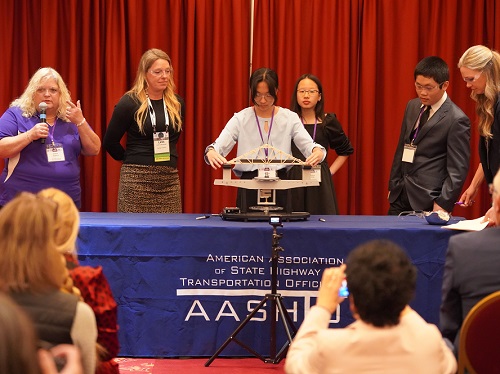
[Editor’s note: The American Association of State Highway and Transportation Officials offers the AASHTO STEM Outreach Solutions program to promote an interest in science, technology, engineering, and math or STEM disciplines among middle and high school students; a program that includes the annual AASHTO Bridge Challenge competition.]
State departments of transportation are involved in a wide array of career outreach efforts to high school students.
For example, in September 2024, the Hawaii Department of Transportation held its 16th annual “Hawaii Construction Career Days” event for middle and high school students at Aloha Stadium in Honolulu.
The agency said its yearly “Construction Career Days” event aims to provide students a “practical and valuable” firsthand look at career and educational opportunities available in Hawaii’s construction industry.
“Our department is happy to give back to our community,” explained Ed Sniffen, director of the Hawaii DOT, at the time. “Our young people will be able to see the wide range of jobs available in the construction field. This is a chance for us to reach out to our future leaders to keep Hawaii’s construction industry thriving and strong.”
And in August 2024, the North Dakota Department of Transportation launched a new science, technology, engineering, and math or STEM education program aimed at promoting interest in transportation careers to high school students; an initiative based on the aforementioned AASHTO STEM Outreach Solutions program.
The program’s hands-on activities introduce students to the work of transportation and civil engineering, with the aim to inspire them to consider careers in those fields, the agency said at the time.
Maryland DOT Forms Transit Development Program
The Maryland Department of Transportation recently created a new grant program to advance development projects near transit stations; a program that aims to spur economic activity and increase connectivity in communities statewide.
[Above photo by Maryland DOT]
The agency said the first round of funding of the Transit-Oriented Development or TOD Capital Grant and Revolving Loan Fund includes $5 million to support local jurisdictions seeking to build “equitable and inclusive development” near transit hubs.
Applications are due by April 8, the agency said, noting that it will hold webinars for interested applicants.
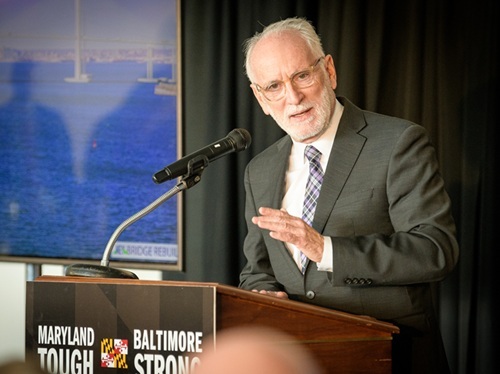
“With every grant awarded through this program, we will be fueling economic growth and building stronger communities across Maryland,” said Maryland DOT Secretary Paul Wiedefeld in a statement.
“By investing in transit-oriented development, we can ensure more Marylanders benefit from new opportunities, reduce congestion, grow our housing stock, and build a greener, more sustainable Maryland,” he added.
Through the TOD Fund – established by the “Equitable Inclusive TOD Enhancement Act” signed into law by Governor Wes Moore (D) in 2023 – Maryland DOT said it seeks to support projects that would lead to dense, mixed-use and mixed-income development.
The Maryland DOT said eligible projects must have a direct connection or benefit to a site the state has designated for transit-oriented development.
Local jurisdictions can apply for up to $1 million for planning, design, or public infrastructure improvements, the agency noted, while nonprofit or private development partners are eligible to apply in partnership with a local jurisdiction for up to $1 million in gap funding for projects within a state-designated transit-oriented development.
Environmental News Highlights – February 19, 2025
Environmental News Highlights – February 12, 2025
Illinois DOT Gears Up for 34th Diversity Conference
The Illinois Department of Transportation is planning to host its 34th “Today’s Challenge, Tomorrow’s Reward” conference February 26 and 27.
[Above image by Illinois DOT]
Sponsored by the agency’s Office of Business and Workforce Diversity, this conference provides minority- and women-owned businesses with opportunities to make connections and develop skills to grow and succeed.
“With record investments in our statewide transportation system, it is more important than ever that we create opportunities for people to build careers, grow their businesses, and participate fully in our engineering and construction programs,” said Acting Illinois DOT Secretary Gia Biagi in a statement. “We are committed to ensuring that minority- and women-owned businesses are supported and successful and we ask the entire contracting community be part of that effort.”
The agency noted that its “Today’s Challenge, Tomorrow’s Reward” meeting offers workshops to build skills, seminars on best practices and networking opportunities for firms and contractors wanting to do business with Illinois via the state’s Disadvantaged Business Enterprise or DBE program.
Conference topics include regulatory updates, funding opportunities, “getting paid” and jobsite safety. Industry leaders and Illinois DOT staff also will be leading sessions on how to bid on, participate in and deliver projects.
Many state departments of transportation provide a wide array of support to DBE programs.
For example, in May 2024, the New Mexico Department of Transportation launched an inaugural Small Business Training and Resources or “STAR” program; a 14-week course designed to provide support and resources for Disadvantaged Business Enterprises or DBEs and other small businesses seeking to work with NMDOT.
The STAR program will guide participants through corrections and improvements to any financial, managerial, technical, or labor conditions which could potentially prevent them from receiving project contracts. The agency added that the program’s “carefully crafted curriculum” is designed to ensure that participants receive a comprehensive learning experience tailored to their unique business needs.
WVDOT Starts Work on Transit Renovation Project
The West Virginia Department of Transportation recently started work on a major facility renovation project for Mountain State Transit Authority or MTA that includes overhauling the MTA’s headquarters and bus garage in Summersville, WV.
[Above photo by MTA]
MTA operates bus services in Nicholas, Webster, Pocahontas, and Greenbrier counties, including the communities of Summersville, Richwood, Webster Springs, and Lewisburg.
The renovation project aims to modernize and expand MTA’s Summersville headquarters, adding new office space and a room dedicated for bus driver training, as well expanding the garage area to house more buses.
The total cost of the renovation is estimated at $2.12 million, with a substantial portion of the funding – $1.69 million – coming from the Federal Transit Administration. WVDOT expects the renovation project to be complete by the fall of 2025.
Bill Robinson, executive director of public transit for WVDOT’s Division of Multimodal Transportation Facilities said this project “marks a significant milestone” for MTA, which has been an essential part of the community and surrounding areas for decades.
“This is the beginning of headquarter rehabilitation projects that will serve the public’s needs for the next 20 years,” he said in a statement.
“We have several people tell us, if it wasn’t for MTA, they would not be able to go to jobs,” added MTA General Manager Tim Thomas. “They would not be able to go to medical. They would not be able to go to school. And by school, I mean college.”
WVDOT noted that this investment in public transit is part of a broader effort by its multimodal division to improve transportation access throughout the Appalachian region of West Virginia, where public transit options are vital for connecting remote areas to larger urban centers.
State departments of transportation across the country provide a wide range of support to local and state-level transit services.
For example, the North Carolina Department of Transportation recently launched a new intercity bus route designed to coordinate with the Virginia Breeze bus service to better connect North Carolina and Virginia.
Buses will operate on this new route twice a day, in the morning and afternoon, seven days a week, and will directly connect to the Virginia Breeze Piedmont Express and Capital Connector intercity bus routes. The route will also directly connect to North Carolina’s Mountaineer East-West Route.
In November 2024, the Ohio Department of Transportation issued grants of more than $17.5 million in grants to public transportation providers in rural and urban areas of the state to help improve workforce mobility.
Those grants went to transit agencies in 16 counties through its Ohio Workforce Mobility Partnership Program or OWMP; supporting 33 transit projects that increase the ease and efficiency of transporting residents to economically significant employment centers or places of employment outside of their home communities.
And in October 2024, the Connecticut Department of Transportation launched a new “Tap & Ride” pilot program that allows customers to pay for bus fares by tapping their Visa or Mastercard branded debit card, credit card, or mobile wallet at contactless payment readers on River Valley Transit and CTtransit Meriden Division buses.
The agency said this project marks a major step in “modernizing public transportation” statewide; providing a seamless and secure way for customers to quickly pay while boarding the bus in select service areas, with no downloads or signups required.
And in late June 2024, the Illinois Department of Transportation issued a new statewide public transportation plan that aims to craft a new “strategic vision” for transit services in Illinois, as well as recommend policy, make performance updates, and identify specific initiatives. The agency noted that the last public transportation plan for Illinois was completed in 2018.
Entitled “Next Move Illinois,” this new transit plan dovetails with Move Illinois, Illinois DOT’s long-range transportation plan that is currently being updated.
The agency said “Next Move Illinois” will incorporate feedback from transit providers to help address the needs of diverse communities across the state, including ideas on enhancing accessibility, fostering long-term ridership growth, optimizing intermodal connectivity and implementing strategic measures to strengthen the transportation network against any future challenges.