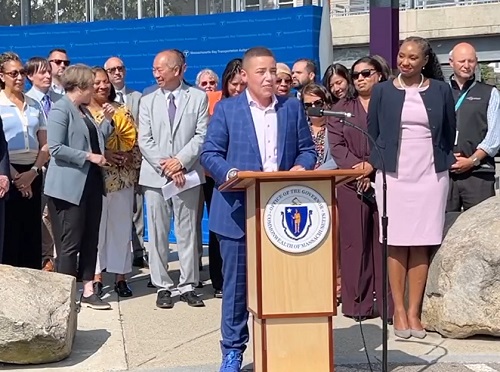
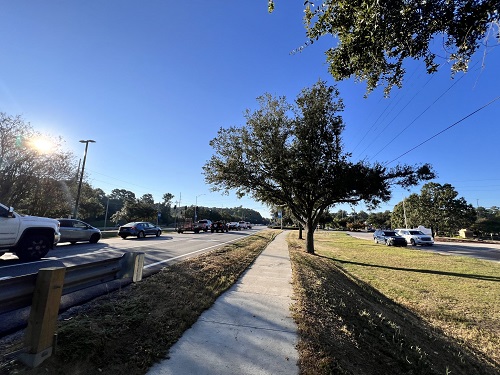
Oklahoma DOT Issues More than $36M in TAP Funding

The Oklahoma Department of Transportation is distributing more than $36 million in Transportation Alternatives Program or TAP funding to 43 local projects that encompass sidewalks, safe-routes-to-school, pedestrian and bicycle trails, plus environmental or historical preservation endeavors as well.

[Above photo by Oklahoma DOT]

“This plan is designed to help improve community connectivity as well as active transportation infrastructure that is not on the highway system,” said Tim Gatz, executive director of the Oklahoma Department of Transportation, in a statement. “These projects highlight the important partnerships we have with communities across the state.”

[Editor’s note: The American Association of State Highway and Transportation Officials recently issued an episode of its “State DOT 2-Minute Update” video series focused on the Oklahoma DOT, detailing the department’s initiative to improve safety on over 5,000 miles of rural two-lane highways by adding safety shoulders to reduce high fatality and severe crash rates.]

The agency said the 2024 TAP application process proved “highly competitive” with a total of 87 eligible project submitted for review. Oklahoma DOT noted that it worked with the Transportation Alternative Advisory Committee, which is comprised of the Oklahoma Department of Commerce, the Oklahoma Department of Health, Safe Routes Partnership, and the American Association of Retired Persons to review and score those TAP applications.

The agency noted that the TAP began in the 2012 reauthorization of surface transportation programs, when the U.S. Congress approved the “Moving Ahead for Progress in the 21st Century” or MAP-21 Act, which consolidated several previous transportation, trail, and safe-routes-to-school project categories into one program to allow more flexibility at the state and local levels.

Through TAP, federal funds provide 80 or 90 percent of the total cost of the projects – depending on the population of the municipality – with the remaining funds provided by the communities applying for the TAP funds.

Other state departments of transportation also made recent TAP disbursements.

For example, the Kansas Department of Transportation recently issued $31.5 million in TAP funding to 31 projects statewide to create safer, more walkable and bike-friendly routes. Since 2019, via the Eisenhower Legacy Transportation or IKE program, Kansas has awarded more than $95 million for 122 TAP projects, the agency said – benefiting both urban and rural communities.

Calvin Reed, Kansas DOT secretary, noted that this year’s announcement marks the largest TAP grant award made by Kansas since the launch of this federal program. “By partnering with local communities, we can enhance our state’s transportation infrastructure while improving accessibility and fostering more connected neighborhoods,” he said.
Environmental News Highlights – October 23, 2024

Utah DOT Installing No-Touch Crosswalk Buttons

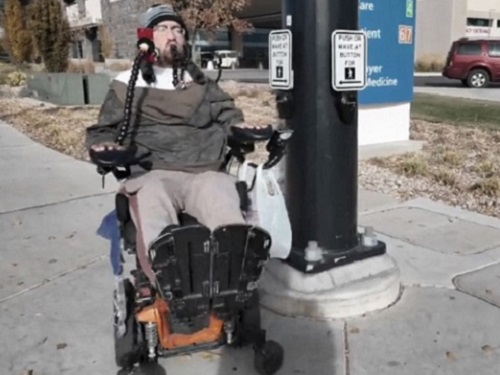
To making crossing the street easier for those with disabilities, the Utah Department of Transportation is installing radar-enabled crosswalk buttons at select intersections statewide.

[Above photo via Utah DOT]

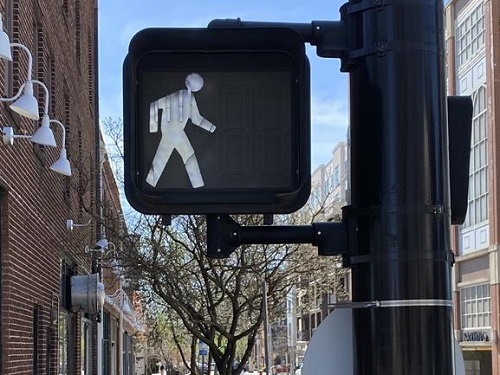
Specifically, the agency is installing “accessible pedestrian signal” or APS technology at those crosswalks. Those systems use two kinds of action – physical movement, like nodding or waving, or activation via a mobile application – to help pedestrians activate crosswalk beacons. Once triggered, the APS keeps pedestrians informed through an audio feature that includes alert statements such as “wait” and “walk sign is on.”

Photo via Utah DOT

“This new crosswalk technology benefits everyone by facilitating safe and independent movement through pedestrian networks regardless of age or ability,” said Mike Blanchette, a Utah DOT traffic engineer, in a statement. “The app and touchless buttons are key components of an accessible, inclusive transportation system.”

Utah DOT noted that it has installed over 1,000 APS buttons at nearly 250 intersections to date, with plans to install APS technology at every signalized intersection on state routes by 2033. The agency added that APS equipment costs approximately $7,000 per intersection and that it has allocated $800,000 per year to purchase and deploy APS buttons going forward.

Currently, the agency said APS technology exists on all state-managed streets in Cedar City and Moab and is expanding to Salt Lake City, Ogden, Provo, and Logan. However, Utah DOT is encouraging the public to participate in the installation process by submitting online forms to notify the agency of the need for APS technology at a specific crosswalk. 

In addition to an online map of existing and planned APS-equipped crosswalks, state residents can also use the “PedApp” mobile application to activate a button. The app also provides pedestrians with real-time supplemental information at crosswalks, such as the amount of walking time remaining or the street name and direction they’re heading. Sight-limited pedestrians can also enable a feature that helps them locate the button, Utah DOT noted.

Image by NCDOT

Many other state departments of transportation are also working on ways to improve crosswalk accessibility and safety; mainly as part of broader activate transportation strategies that address pedestrian needs.

For example, in August, the North Carolina Department of Transportation adopted a new traffic signal policy that aims to boost pedestrian safety.

The new NCDOT policy states that, as new traffic signals are installed or existing ones are upgraded, they will be programmed with what is called a “leading pedestrian interval​” or LPI.

That technology is designed to give pedestrians a “head start” of three to seven seconds in marked crosswalks before motorists on the parallel direction get a green light. This interval allows pedestrians to better establish themselves in the crosswalk to drivers who must yield to them before making a left or right turn.

“This change makes pedestrians more visible for drivers,” explained Nick Zinser, NCDOT’s Western Region signals engineer, in a statement. “It’s a safety enhancement, and it can be done at a low cost by reprogramming the existing equipment at our traffic signals.”

Image by TX DOT

Concurrently, the Texas Department of Transportation is developing a Statewide Active Transportation Plan or SATP to gather recommendations for improving bicycling, walking, and rolling conditions across the Lone Star state.

The Kansas Department of Transportation unveiled a revised active transportation plan in May 2023 to boost walking, bicycling, safe wheelchair use, skateboarding, and non-motorized vehicle mobility options across the state.

The Oklahoma Department of Transportation also began working on its first-ever active transportation plan in 2023 – a policy toolkit the agency said can be used internally and by Oklahoma counties and towns as engineers and designers look to develop more people-friendly infrastructure.

Meanwhile, the Washington State Department of Transportation unveiled a formal Active Transportation Plan in December 2021 – a plan that subsequently won the 2022 America’s Transportation Awards contest’s “People’s Choice Award.”

Tennessee DOT Rolls out New Scouting ‘Trash Patch’

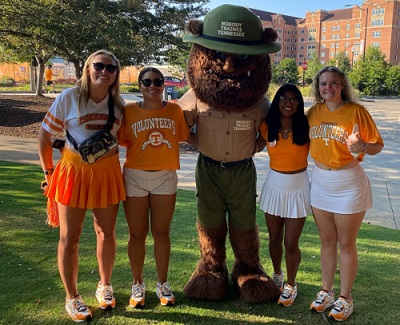
The Tennessee Department of Transportation recently introduced a new “trash patch” for Girl and Boy Scout troops that conduct litter cleanups in their communities.

[Above image by Tennessee DOT]

Launched in 2023, the patch program – part of the agency’s Nobody Trashes Tennessee litter prevention campaign – features “Trashsquatch,” a litter prevention “mascot” that is “on a mission” to end littering statewide.

‘Trashsquatch’ and friends. Photo via Tennessee DOT.

“We launched our patch program last year and it was widely received by scout groups throughout the state,” said Brittany Morris, Tennessee DOT’s transportation program supervisor, in a statement. “As we continue to expand our youth outreach, the new Trashsquatch patch offers another incentive to those that participated in 2023, to join us once again, especially during No Trash November.”

While scouts may conduct their cleanup and access educational resources all year long, the new patch is being rolled out just in time for the agency’s “No Trash November” initiative. In its fourth year, “No Trash November” encourages state residents of all ages to participate in cleanup events in their communities.

“Last year’s No Trash November campaign included more than 150 events with over 2,200 volunteers who collected more than 86,000 pounds of litter from the state’s roadways,” said Morris. “This year, with the help of participating scouts – and with Trashsquatch cheering them on – we aim to grow the initiative’s reach even more.”

Currently, all three Girl Scout councils and all six Boy Scouts of America councils serving Tennessee are working with the agency as part of its litter prevention education and patch program.

Additional youth service groups with patch programs are also welcome to participate, Tennessee DOT noted, adding that the patches are provided following the cleanups at no cost to the participating organizations or individual scouts.

Other state departments of transportation use similar youth-focused initiatives as part of their respective statewide litter cleanup programs.

Image by Pennsylvania DOT

For example, the Pennsylvania Department of Transportation and volunteer-based education organization Keep Pennsylvania Beautiful (KPB) announced in September the 2024-2025 cohort of “Young Ambassadors of Pennsylvania” – a program launched by the agency in 2021 as a way to grow the next generation of leaders and help keep communities statewide be free of litter.

PennDOT conducted the Pennsylvania Litter Research Study from 2018 through 2019 along with the Pennsylvania Department of Environmental Protection, Keep America Beautiful, and KPB, to determine the impact and removal cost of litter along state roadways – which, at the time, came to $13 million annually for the agency alone and $68 million every year for city governments across the state.

The study also recommended creating a youth education and outreach program to help reduce littering, which resulted in the creation of the “Young Ambassadors” program.

KPB provides education and training to program participants on topics related to the impacts of litter, litter prevention, waste management and recycling, civic engagement and related public policy, volunteer management, and social media marketing.

In May, the Utah Department of Transportation launched a new volunteer litter removal program called “Keeping Utah Beautiful” – a program designed to make it easy for members of the public to go online and sign up for a one-time cleanup of state roads.

The agency said these volunteer cleanups will supplement the work of Utah DOT crews who regularly pick up litter statewide. To ensure volunteer safety, “Keeping Utah Beautiful” participants will not clean interstates or some state routes, the Utah DOT stressed – and requires that program volunteers be a minimum 14 years of age.

That same month, the Oklahoma Department of Transportation and Missouri Department of Transportation announced the winners of their respective 2024 “trash” contests; poster-making and trash-can decoration campaigns involving elementary though high school students in order to help raise awareness regarding roadway litter removal needs.

Environmental News Highlights – October 16, 2024

EPA Issues $14.3M Grant for EV Chargers to Delaware

The Environmental Protection Agency recently issued a $14.3 million Climate Pollution Reduction Grant or CPRG to Delaware to build medium and heavy-duty electric vehicle (EV) recharging infrastructure along the stretch of Interstate 95 within its borders

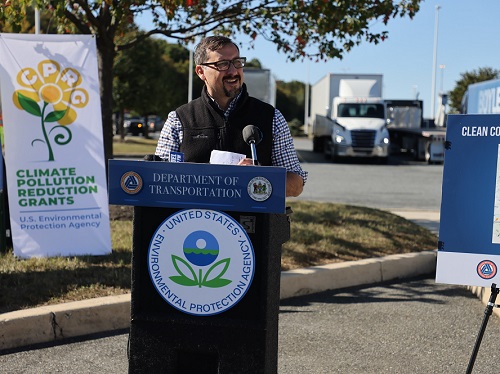
[Above photo of Nicole Majeski, Delaware DOT secretary, by the Delaware DOT]

The grant also helps support broader efforts by the Clean Corridor Coalition to provide more EV recharging options along segments of the I-95 highway corridor, which stretches from Maine to Florida.

Under the CPRG program, the Clean Corridor Coalition – a quarter billion-dollar project which includes Connecticut, New Jersey, Maryland and Delaware – is expected to reduce greenhouse gas emissions from gasoline and diesel fuel by deploying EV charging infrastructure for commercial zero-emission medium-and heavy-duty vehicles.

The four-state coalition will collaborate to provide technical assistance in developing charging sites and provide workforce training and support services, conduct meaningful community engagement, and enable planning by states and stakeholders along the corridor, the EPA said.

EPA’s Adam Ortiz. Photo by Delaware DOT.

“This investment is a critical down payment for zero-emission freight movement in participating states,” said Adam Ortiz, EPA’s administrator for the Mid-Atlantic region, in a statement.

“The Clean Corridor Coalition project plans to support the construction of 20 freight truck electric charging sites, including nearly 150 charging ports for overnight use, and over 300 fast or ultra-fast charging ports to advance electrification of a national priority freight corridor,” he added. “The project also aims to enhance workforce development through a program to train 400 individuals from low income and disadvantaged communities in the construction, operation, and maintenance of this new clean infrastructure.”

“By adding charging stations along I-95, we’re helping reduce pollution and better the air quality, while also supporting the freight industry; two things we all rely on,” noted Nicole Majeski, secretary of the Delaware Department of Transportation. “We are excited to work with our neighboring states and look forward to seeing the benefits of this project.”

Authorized under the Inflation Reduction Act, EPA said its CPRG program will provide nearly $5 billion in grants for states, local governments, tribes, and territories to develop and implement greenhouse gas emission reduction plans while benefitting low-income and disadvantaged communities.

Caltrans Develops & Issues Wildlife Connectivity Report

The California Department of transportation recently issued a newly-developed Wildlife Connectivity Report, which identifies more than 140 locations where roadways can be better integrated with the migration needs of animals statewide.

[Above photo by Caltrans]

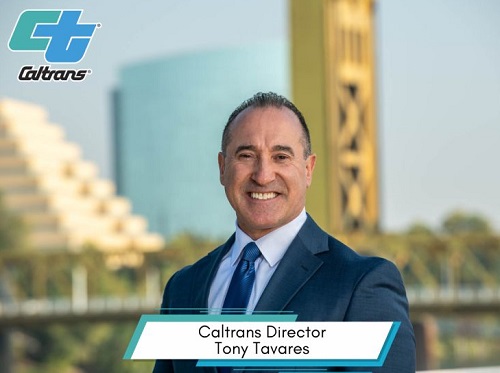
“Caltrans is seeking opportunities to better integrate our highway system with the state’s diverse natural environment” explained Tony Tavares, director of Caltrans, in a statement.

Photo by Caltrans

“It is our responsibility to improve passageways for wildlife that live and migrate along our shared ecosystem, and remediation efforts highlighted in this report will help honor our goal to provide a world class transportation system that serves all people and respects the environment,” he said.

Caltrans is also working with the California Department of Fish and Wildlife or CDFW to implement a strategy to address wildlife connectivity barriers across the state’s vast transportation network while better protecting and restoring biodiversity.

To that end, Caltrans said its new report proposes numerous projects designed to remediate fish and wildlife barriers – as well as construct dozens of migration corridors adjacent to state highways and interstates – helping approximately 180 native, endangered, or threatened animal species to move more freely and have better access to their natural habitats.

[Editor’s note: The video below from the New Mexico Department of Transportation explains the role wildlife crossings play in the protection both animals and the traveling public.]

“Habitat connectivity is one of the most critical issues we’re confronting in the 21st century to maintain California’s biodiversity and healthy fish and wildlife populations,” noted CDFW Director Charlton Bonham.

“We have to find ways for fish and wildlife to move safely across the landscape – to prevent inbreeding and increase genetic diversity, to escape poor habitat burned by wildfire or parched by a warming climate, to prevent vehicle collisions on busy roadways,” Bonham said. “That’s why we are excited to partner with Caltrans to help provide solutions and create the opportunity for wildlife to move safely.”

Other state departments of transportation are engaged in similar wildlife protection efforts.

The Utah Department of Transportation is currently installing nearly three miles of wildlife fencing along the outside perimeter of Echo Junction where I-84 and I-80 meet, north of the Echo Reservoir in Summit County. That new stretch of fencing – which should be fully installed by November – will help funnel wildlife to a nearby freeway under crossing.

Additionally, in November 2023, the Wyoming Department of Transportation completed wildlife crossings built as part of its $15.1 million Dry Piney project.

The Dry Piney project – a joint effort between the Wyoming Game and Fish Department and the Wyoming DOT – includes nine underpasses and 16.7 miles of eight foot-high fencing on both sides of Highway 189 in the western part of the state to protect big game animals, primarily mule deer.

[Editor’s note: A research document released in July 2022 by an international pool funded study led by the Nevada Department of Transportation provides an “authoritative review” of the most effective measures to reduce animal-vehicle collisions, improve motorist safety, and build safer wildlife crossings.]

More broadly, in December 2023, the Federal Highway Administration issued $110 million in grants to 19 wildlife crossing projects in 17 states, including four projects overseen by Native American tribes.

FHWA noted at the time that its data indicates there are more than one million wildlife vehicle collisions in the United States annually, with wildlife-vehicle collisions involving large animals resulting in approximately 200 human fatalities and 26,000 injuries to drivers and their passengers each year.

Those collisions also cost the public more than $10 billion annually, according to FHWA; a figure that includes the total economic costs resulting from  wildlife crashes, such as loss of income, medical costs, property damage, and more.

Environmental News Highlights – October 9, 2024

The Role of Cadaver Dogs in Transportation Projects

The most recent episode of “The Stream by AASHTO” podcast examines how cadaver dogs can play a key role in identifying buried remains and culturally sensitive artifacts during transportation projects.

[Above image by the U.S. Dept. of Defense]

“The Stream by AASHTO” podcast is part of the AASHTO Environmental Management technical service program for state departments of transportation. It explores a wide array of environmental topics that affect transportation and infrastructure programs.

Jen Andersen. Photo via TxDOT.

On this podcast episode, Jen Anderson with the Texas Department of Transportation discusses how cadaver dogs are one of the many archaeological resources the agency deploys as part of its transportation initiatives.

She noted that the exceptional sense of smell of cadaver dogs helps TxDOT locate historic and prehistoric resources – especially ancient burial grounds – ensuring that significant cultural sites are preserved.

She notes that teams of archaeologists and historians as well as environmental scientists work with TxDOT engineers every day to plan around the state’s historic and natural cultural resources before the construction of roads and bridges begins.

To listen to the full podcast episode, click here. To access the full archive of “The Stream by AASHTO” podcasts, click here.

MassDOT Issues Alternative Transportation Grants

The Massachusetts Department of Transportation recently issued nearly $3 million via its new Transportation Management Associations or TMA grant program to support 18 projects that encourage alternative transportation options, reduce greenhouse gas emissions, and expand mobility.

[Above image by MassDOT]

The agency said those grant awards include funding to operate and publicize shuttle buses, promote biking, facilitate carpools, and more.

Monica Tibbits-Nutt at podium. Photo by MassDOT.

MassDOT noted that a TMA is a non-profit, membership-based organization that focuses on improving transportation options and infrastructure within a specific region or community; typically formed through collaboration between local businesses, government agencies, and community stakeholders to address the unique transportation needs of their respective regions.

The agency noted that TMAs implement programs and initiatives aimed at promoting alternative transportation methods like carpooling, vanpooling, biking, walking, and public transit usage. They also provide transportation-related services, including shuttle bus programs, carpool matching services, and commuter incentives – all geared towards reducing single-occupant driving.

“The projects funded by our new TMA program will help workers access jobs and support employers who want to recruit and retain talented employees – while moving us closer to a greener and cleaner future,” said MassDOT Secretary & CEO Monica Tibbits-Nutt in a statement. “This is just another example of how vital a robust transportation network is for economic development and opportunity.”

State departments of transportation across the country provide support to a variety of active transportation endeavors.

Photo by Alabama DOT

In early October, the Alabama Department of Transportation approved TAP funding to continue expanding walkways for pedestrians in several communities located in the southwestern part of the state.

In September, the Maryland Department of Transportation announced that is developing what it calls a “landmark action plan” to improve and expand trail connectivity statewide.

The agency said this plan will guide future investment in shared-use paths, helping to advance efforts to reduce greenhouse gas emissions, boost alternatives to driving, and prioritize the safety of all road users across the transportation network.

Updated for the first time in more than a decade, the agency said its revised “Maryland State Transportation Trails Strategic Plan” should be completed by 2025.

Also, in May, the Utah Department of Transportation issued nearly $95 million to support 19 trail projects – including the construction of new paved trails as well as funding for planning efforts to fill in existing trail gaps – as part of creating a regional “Utah Trail Network” across the state.

The agency said that it collaborated with communities statewide regarding the allocation of that funding – approved by the Utah Transportation Commission – to select the key projects for this statewide trail network.

Additionally, the Texas Department of Transportation is developing a Statewide Active Transportation Plan or SATP to gather recommendations for improving bicycling, walking, and rolling conditions across the Lone Star state.

TxDOT noted the SATP is being integrated with its other long-range mobility plans to help it maintain a safe, accessible, connected, and fully integrated multimodal transportation system for the future, since the population of Texas is expected to grow by 28 percent by 2050.