AASHTO Comments on Noise Abatement Proposals

The American Association of State Highway and Transportation Officials recently submitted a detailed six-page letter to the Federal Highway Administration commenting on the agency’s proposed revisions to “Procedures for Abatement of Highway Traffic Noise and Construction Noise” regulations issued in October.

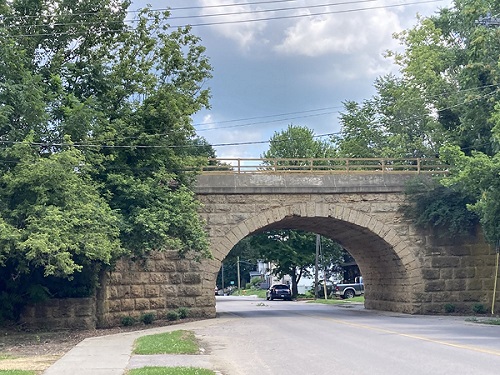
[Above photo by FHWA]

AASHTO recognized in its letter that FHWA’s notice of proposed rulemaking or NPRM results from “years of FHWA research and feedback received from AASHTO in 2015 and 2019” on appropriate and effective noise standards to protect the public’s

health, welfare, and livability in the planning, design, construction, and operation of highways.

However, while AASHTO said it supports the proposed update to the federal noise abatement program, the organization stressed it is “concerned that the lack of detailed language” in the new definitions and clarification of rule changes will create challenges for state departments of transportation in implementing the final rule.
Graphic by AASHTO

[Editor’s note: A recent two-part series on “The Stream by AASHTO” podcast illustrated how state DOTs are working to minimize the impact of roadway noise in their respective areas of the country.]

“Additionally, AASHTO believes the proposed implementation timeline will impact the ability to develop state noise policies in compliance with this rule,” the organization added in its letter. “AASHTO supports restructuring [of the regulations] to better follow a state DOT’s noise abatement process and decision-making and clarify new and existing definitions.”

Also, while AASHTO supports increased flexibility for state DOTs to use modern abatement techniques and flexibility for screening and modeling, the association “believes the flexibility as framed in the NPRM is too vague and can result in downstream issues related to FHWA approvals and litigation. Therefore, AASHTO requests FHWA to include clear and concise guardrails on this flexibility in supplemental guidance documents.”

Many state DOTs are already experimenting on ways to reduce roadway noise via a number of infrastructure initiatives.

For example, in February, the Connecticut Department of Transportation began installing “quiet pavement” as part of a road resurfacing project.

The three-lane (each way) 6.7-mile stretch of I-95 from the New York state line to Stamford carries about 135,000 vehicles a day, much of it commuter traffic to and from New York City. This particular Connecticut DOT interstate paving project included a special asphalt mix designed to absorb more noise than concrete and last longer than traditional asphalt.

The impetus behind using this “quiet pavement” material derived from feedback from people who live and work in the area; they asked the agency to do something about the interstate noise, noted Connecticut DOT Commissioner Garrett Eucalitto at the time.

“We seek out resident, business, and stakeholder input when any project is undertaken,” said Eucalitto, who also serves as the 2024-2025 president of AASHTO. “These groups know the needs of the area and their insights are valued and appreciated.”

Maine DOT Offers New Online Safety Resource

The Maine Department of Transportation recently launched a new online resource aimed at cataloging its roadway safety efforts while buttressing the agency’s overall vision of a safe and equitable transportation system.

[Above photo by Maine DOT]

The new “2024 Safety Initiatives” online story map includes information regarding Maine DOT’s efforts to utilize “context-specific decision-making” in how the agency sets speed limits, manages roadway speeds, and implements its updated Complete Streets policy to ensure all transportations system users can get where they are going.

[Editor’s note: In a separate effort, the department recently awarded $2 million in state funds for support transit providers statewide as part of the Maine State Transit Plan, which seeks to increase service, improve information, remove barriers, and address the needs of underserved populations in rural Maine.]

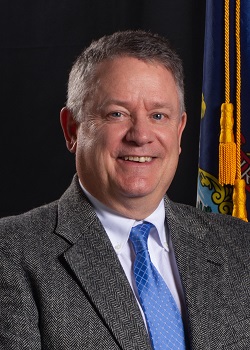
Bruce Van Note. Photo by the Maine DOT.

“At Maine DOT, we have always been early adopters of many safety-related practices, and these new tools represent an important step forward in the safety portion of our mission,” noted Maine DOT Commissioner Bruce Van Note in a statement.

“To keep improving safety for our customers, our team members continuously monitor national highway safety practices and programs to identify, test, and implement new measures that can make a real difference here in Maine,” he added.

The new online resource page includes several important key Maine DOT policies and tools, including:

  • Maine DOT’s new Roadway Context Classification System, including a map of context classifications statewide and an explanation of the different classifications.
  • Information regarding Maine DOT’s new speed-limit-setting process and speed management guidance including a set of traffic-calming measures and tools.
  • Maine DOT’s updated Complete Streets Policy, which now includes additional guidance regarding context-specific design elements that benefit safety, walking, and bicycling.

The page also includes information on Maine DOT’s updated Local Cost Share Policy. While not a safety initiative by itself, this policy does have impacts on how infrastructure and safety projects are funded, the agency said.

Other state departments of transportation are engaged in creating similar resources to address a host of mobility safety needs.

For example, the Maryland State Highway Administration (SHA) – a division of the Maryland Department of Transportation – is working to strengthen commitment to improve safety for vulnerable road users; defined as individuals walking, cycling or rolling, who are at a higher risk of injury or fatalities in crashes.

To better understand their challenges, the agency noted in a statement that it has launched an online statewide survey and is inviting public input through January 31, 2025.

The survey, conducted by the SHA’s Office of Traffic and Safety, will collect feedback to help guide future infrastructure decisions aimed at making Maryland’s roads safer for all users. Participants can use a digital map to pinpoint key locations, such as neighborhoods, workplaces and routes where enhanced biking and walking infrastructure would make a difference, Maryland DOT said.

Data from this survey will also play a key role within Maryland DOT’s “Complete Streets” policy, which prioritizes safe, reliable, equitable and sustainable travel across all modes to make roads safer and connect Marylanders to jobs, education and economic opportunity.

‘No Trash November’ Clears 70,000 Pounds of Litter

The fourth annual “No Trash November” cleanup event spearheaded by the Tennessee Department of Transportation removed nearly 70,000 pounds of litter from state roadways and waterways in 2024.

[Above photo by Tennessee DOT]

Part of the agency’s Nobody Trashes Tennessee campaign, the yearly “No Trash November” effort brings together Keep Tennessee Beautiful affiliates, Tennessee DOT granteesAdopt-A-Highway groups, youth groups, water groups, and individuals who all work together to clean up trash as part of that state initiative.

All told, 2,412 volunteers participated in 175 “No Trash November” cleanups in 2024, collecting 3,207 bags of litter, weighing 69,776 pounds.

Photo by Tennessee DOT

The agency noted that litter on public roads and waterways has detrimental impacts on safety, the environment, and the economy. At any given time, there are 88 million pieces of litter on the state’s roadways and Tennessee DOT spends more than $23 million annually on litter pickup and prevention education; efforts funded through dedicated revenue from Tennessee’s Soft Drink and Malt Beverage industries.

“[These] community cleanups and individual actions taken [in November 2024] showcase what we can achieve when we work together to preserve our state’s beauty,” Michael McClanahan with Tennessee DOT’s Beautification Office noted in a statement.

“We encourage all residents to be a part of the solution to end littering,” he added. “Even small, simple actions can help, from reducing single-use plastics to recognizing that food waste is litter, every effort counts.”

State departments of transportation are involved in several beautification and trash removal efforts.

For example, three New Mexican state agencies – the New Mexico Department of Transportation, New Mexico Department of Tourism, and New Mexico Department of the Environment – recently awarded a total of $4.7 million in grants to 97 local entities to support litter removal and community cleanup projects as part of a new state beautification campaign.

New Mexico’s new “Breaking Bad Habits” campaign seeks to encourage state residents to preserve New Mexico’s “unparalleled landscape” by removing litter, preventing illegal dumping, and other related efforts.

In May, the Utah Department of Transportation launched a new volunteer litter removal program called “Keeping Utah Beautiful” – a program designed to make it easy for members of the public to go online and sign up for a one-time cleanup of state roads.

The agency said these volunteer cleanups will supplement the work of Utah DOT crews who regularly pick up litter statewide. To ensure volunteer safety, “Keeping Utah Beautiful” participants will not clean interstates or some state routes, the Utah DOT stressed – and requires that program volunteers be a minimum 14 years of age.

On another front, to make roadway debris removal operations faster and safer, the South Carolina Department of Transportation started installing “lane blades” on select highway incident response vehicles in 2023.

Meanwhile, the Mississippi Department of Transportation launched a new anti-litter webpage as part of a renewed statewide anti-littering campaign that kicked off in August 2023 – a “one-stop hub” that contains information about the state’s Adopt-a-Highway program, Mississippi litter statistics and resources, stormwater pollution information, anti-litter resources for school teachers, and much more.

And in April 2023, the Illinois Department of Transportation launched a new public outreach effort called “Think Before You Throw!” as part of its ongoing awareness campaign to reduce littering on state highways and roads.

That “Think Before You Throw!” initiative aims to reduce roadside litter along the state’s more than 150,000 miles of roads by raising awareness of the negative environment impact of trash, for both state residents and the nearly 100 million tourists who visit annually, the agency said.

Environmental News Highlights – December 11, 2024

New York to Invest $100M in Road Sustainability Effort

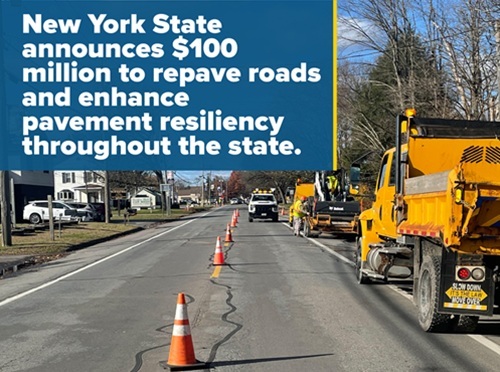
Governor Kathy Hochul (D) recently announced a $100 million investment to enhance the resiliency of 551 lane miles of state highway in 70 locations across New York that are being affected by “extreme weather,” partially with funding from the Infrastructure Investment and Jobs Act.

[Above photo by NYSDOT]

“Between extreme heat in the summer, devastating winter storms and the ongoing saga of freeze-thaw cycles, New York’s roads take a pounding from extreme weather in all seasons, and this investment takes direct aim at rejuvenating some of the state highways most impacted by extreme weather,” she explained in a statement. “Keeping our infrastructure in a state of good repair is a sound investment that not only increases resiliency but spurs economic development and tourism across New York.”

Image by NYSDOT

“Targeted infrastructure investments not only enhance public safety, but the resiliency and sustainability of New York’s vast network of roads and bridges,” added Marie Therese Dominguez, commissioner of the New York State Department of Transportation. “Smart transportation investments have the ability to bring people and communities together, and that’s just what this investment in our critical infrastructure will do across New York State.”

“Extreme freeze-thaw cycles and devastating flooding like we witnessed last year in the Hudson Valley already lay waste to our roadways, and with these once-in-a-lifetime weather catastrophes only increasing in frequency, we need to strengthen our infrastructure now,” noted Rep. Pat Ryan (D-NY).

Several state departments of transportation are already at work testing a variety of different materials to meet infrastructure construction needs.

For example, the Montana Department of Transportation recently detailed in a video its work with Montana State University to develop a lower cost Ultra-High Performance Concrete or UHPC formula. After years of developing and thoroughly testing a new UHPC formula in the laboratory, the team put it to work when replacing two badly deteriorated concrete bridges in southwest Montana.

Meanwhile, in July, the Illinois Department of Transportation signed a six-year $48 million agreement with the University of Illinois Urbana-Champaign’s Illinois Center for Transportation to continue a longtime joint research program.

That agreement aims to help Illinois DOT solve key transportation challenges, such as creating safer and more sustainable infrastructure, reducing congestion, achieving more equitable transit systems, preparing for autonomous vehicles, and more.

At the top of the list of priorities is developing and implementing next-generation mobility technologies while ensuring a safe, resilient and net-zero emission transportation system by 2050, Illinois DOT said.

Reusing Paint to Improve Idaho Airstrips, Save Money

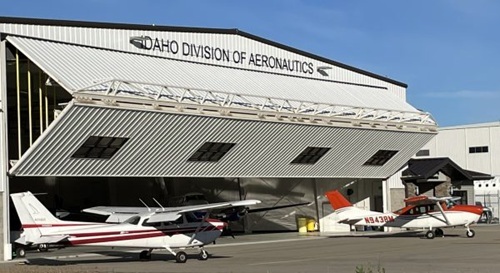
The Idaho Transportation Department’s Division of Aeronautics recently began re-using paint typically discarded by the agency’s testing laboratory for re-striping local airport runways.

[Above photo by the ITD]

ITD’s Central Laboratory provides testing services for all the agency’s districts for a variety of construction materials used to build state transportation infrastructure – including the paint used for highway markings and striping.

Craftsmen Justin Fort and now-retired Joe Fleck with ITD’s aeronautics division, along with ITD District 3 Foreman Jerry Richards, found out that Central Labs disposes of about 60 to 70 gallons of paint each year after testing.

Photo by ITD

While it costs ITD’s aeronautics division $20 to buy a gallon of paint, it costs Central Labs about $200 to dispose of a five-gallon bucket of paint after testing. Thus, it made financial sense for the laboratory to hand off excess paint to the aeronautics division instead of paying to dispose of it, ITD noted.

The division got in touch with Central Labs Senior Chemist Rachel Owens and decided to pick up and start using the paint to help maintain runway markings and striping at Idaho’s 32 backcountry airstrips; markings that requires a fresh coat of paint every five years.

By thinking outside the box, ITD’s Central labs and aeronautics division are saving the agency $4,520 a year by using paint that normally ends up as expensive trash.

“We have painted four airstrips this fall, all with sample or test paint from Central Labs,” noted Fort in statement. “We have been collecting and saving the test paint for over a year, until this August, when we got our new sprayer. It took only two hours to spray the markers and segment circles at each airstrip.”

Many state departments of transportation are involved in projects that reuse and/or recycle a variety of materials within the infrastructure projects they oversee.

For example, the Utah Department of Transportation is recycling old concrete on the site of its Bangerter Highway project to help build the highway’s new interchanges.

To recycle concrete for reuse, the project’s construction crews use heavy machinery to break up the old sections of the highway, placing that material into an onsite crushing machine equipped with a large magnet inside to separate the concrete from the metal rebar, which is also recycled.

Once all the large cement chunks are crushed into tiny pieces, Utah DOT reprocesses the material into a road base for the new interchange.

In 2023, the New Jersey Department of Transportation released a video detailing how its use of “foamed glass aggregate” provides a multitude of green benefits to the state – especially as the material is made from recycled glass bottles.

Also in 2023, the “Q&A podcast” produced by AASHTO re:source – a technical service program offered by the American Association of State Highway and Transportation Officials – interviewed Ed Sniffen, director of the Hawaii Department of Transportation, for a two-part episode about how his agency has tested the incorporation of recycled plastics into its road paving processes.

Environmental News Highlights – December 4, 2024

Hawaii DOT Completes Leeward Bikeway Project

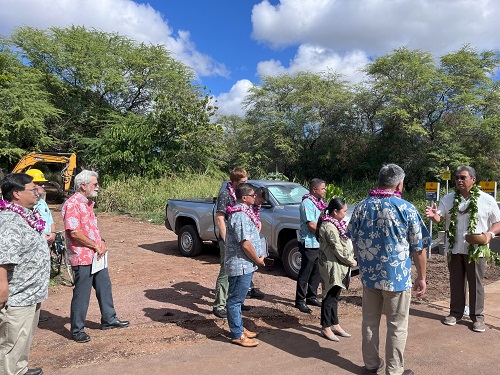
The Hawaii Department of Transportation recently completed construction of the $15.7 million Leeward Bikeway; a dedicated bikeway within the former Oahu Railway & Land Company right-of-way between Philippine Sea Road in ‘Ewa and Waipahu Depot Street.

[Above photo by the Hawaii DOT]

The new 3.51-mile path links together the previously unconnected West Loch Bike Path and the existing Pearl Harbor Historic Trail. Work included construction of 723 linear feet of retaining wall; utility relocation; demolition and construction of new bridge structures at Waikele Stream and Kapakahi Stream; paving the nine-to-10-foot path with asphalt concrete; and installation of concrete posts to prevent the use of the bikeway by motorized vehicles.

Image by AASHTO

[Editor’s note: State departments of transportation across the country develop bicycle routes, which the American Association of State Highway and Transportation Officials then officially designates within the U.S. States Bicycle Route System or USBRS. In February 2021, AASHTO and Adventure Cycling signed a memorandum of understanding or MOU to formalize their now 17-year partnership to create a national 50,000-mile bicycle route network. Twice each year, AASHTO’s U.S. Route Numbering Special Committee reviews and recommends to the AASHTO Board of Directors revisions, additions, or deletions to the U.S. numbered routes and Interstate Highway System. The special committee also reviews and recommends the approval of new and revised U.S. bicycle trails that are critical to the expansion of the USBRS.]

The new bikeway is also compliant with the Americans with Disabilities Act and will improve travel safety between ‘Ewa and ‘Aiea by removing potential for conflict between bicyclists, pedestrians and motorists.

This project supports continued residential, business, and commercial growth in the ‘Ewa and Central Oahu areas by providing a non-motorized transportation facility and increased transportation choice, the agency said.

Photo by Hawaii DOT

“The state is proud to support projects like the Leeward Bikeway, which have potential to improve the health of our communities,” said Governor Josh Green (D) in a statement. “The opening of the path also expands access for community members to the scenic, natural and historic resources of the Pearl Harbor National Wildlife Refuge.”

“The Leeward Bikeway is a critical element to complete the statewide pedestrian, bicycle, and transit network included in our Navahine settlement agreement,” added Ed Sniffen, Hawaii DOT director. “We appreciate the support … of our partners, especially the Section 106 parties, as we worked to make this regional multimodal connection a reality.”

Other state DOTs are engaged in similar work, especially when it comes to re-purposing rights-of-ways into multiuse trails.

For example, in August, the Illinois Department of Transportation outlined in a blog post how it helped transform an old railroad line and bridge in the city of Dixon, IL, into a trail for pedestrians, bicyclists, and other active transportation users.

Photo by Illinois DOT

The last train using the old Illinois Central Railroad line that once ran through the heart of Dixon rolled through the town in 1985. In 2016, the municipality began planning the conversion of that rail line into a multi-use trail with a combination of state and local funds as well as $3.4 million in federal funds disbursed by the Illinois DOT.

Meanwhile, in terms of broader trail development efforts, the Maryland Department of Transportation kicked off development efforts for what it calls a “landmark action plan” in September to improve and expand trail connectivity statewide. The agency said this plan will guide future investment in shared-use paths, helping to advance efforts to reduce greenhouse gas emissions, boost alternatives to driving, and prioritize the safety of all road users across the transportation network.

Updated for the first time in more than a decade, the agency said its revised “Maryland State Transportation Trails Strategic Plan” should be completed by 2025.

Similarly, in May, the Utah Department of Transportation issued nearly $95 million to support 19 trail projects – including the construction of new paved trails as well as funding for planning efforts to fill in existing trail gaps – as part of creating a regional “Utah Trail Network” across the state.

Additionally, the Texas Department of Transportation is developing a Statewide Active Transportation Plan or SATP to gather recommendations for improving bicycling, walking, and rolling conditions across the Lone Star state.

TxDOT noted the SATP is being integrated with its other long-range mobility plans to help it maintain a safe, accessible, connected, and fully integrated multimodal transportation system for the future, since the population of Texas is expected to grow by 28 percent by 2050.

Arizona DOT Partners with State Schools for Research

A new research partnership between the Arizona Department of Transportation and the state’s three public universities seeks to help the agency stay at the forefront of innovation, nurture a new generation of transportation professionals, and support Arizona’s economy. 

[Above image by Arizona DOT]

The Arizona DOT said it entered into an agreement with the newly-formed Arizona Transportation Institute or AZTI to leverage the expertise of faculty and students at the University of Arizona, Arizona State University, and Northern Arizona University.

Through the AZTI, based at the University of Arizona, faculty at the three universities will submit proposals to conduct transportation research, with the AZTI encouraging collaboration among universities. This collaboration aims to foster innovative transportation technologies, planning methods and engineering approaches that can improve Arizona’s transportation system and create better communities.

“We’re tremendously excited to partner with talented faculty and students in a way that can improve the lives of Arizonans, support our state’s economy and promote transportation engineering as an exciting and essential career,” said Jennifer Toth, Arizona DOT director, in a statement.

“Arizona will benefit tremendously from establishing this coordinated structure for the brightest minds at the three universities to optimize transportation, a huge quality-of-life issue for every resident,” added AZTI Director Yao-Jan Wu, a University of Arizona professor of civil and architectural engineering and mechanics.

University researchers are already working on a number of research projects requested by Arizona DOT, including: 

  • Examining the impact of heavier and oversize vehicles on roads and bridges – in comparison to other vehicle types – in terms of construction, maintenance, and repair costs.
  • The development of “Arizona-specific factors” to aid Arizona DOT’s decisions on the location and types of safety countermeasures intended to reduce the frequency and severity of motor vehicle crashes. 
  • Studying whether landscaping and vegetation management that encourages recovery of native plants following wildfires can reduce repair and maintenance costs for roadways. 

Many state departments of transportation are involved in a wide variety of partnerships with universities and colleges in their regions.

For example, in August, the North Carolina Department of Transportation, in partnership with N.C. State University’s Institute for Transportation Research and Education, launched a “groundbreaking project” aimed at mapping unmarked burial sites belonging to historically marginalized groups statewide.

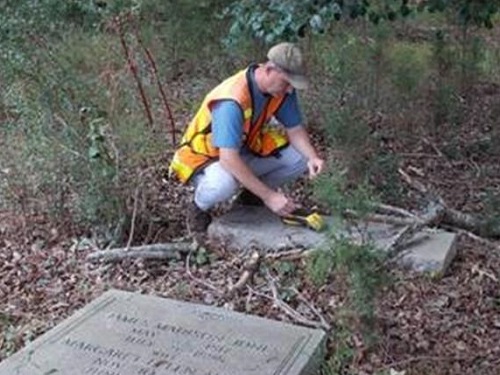
Photo by NCDOT

That research project, led by NCDOT’s Office of Civil Rights and N.C. State, began this summer and will extend through the summer of 2026. It will focus on identifying and mapping Indigenous burial sites, graves of formerly enslaved individuals, and historic African American cemeteries.

The agency said unmarked burial sites have long faced disproportionate risks and vulnerabilities as North Carolina’s popularity leads to increased commercial and residential development and transportation projects; with experts concerned that development coupled with more frequent storms could make it more difficult to identify and preserve these burial sites.

Meanwhile, the college of engineering at the University of Missouri established the Missouri Work Zone Safety Center of Excellence or “MOWZES” in October 2023 to develop behavioral, educational, engineering, and technology solutions to achieve zero fatalities and serious injuries in highway work zones.

The first focal point for that new center – which is supported by over $1.5 million in combined funding from the Missouri Department of Transportation and the Federal Highway Administration – is the five-to-seven-year long I-70 project, which aims to improve the east-west transportation corridor connecting St. Louis and Kansas City.

Environmental News Highlights – November 20, 2024