



Tennessee DOT Kicks Off Spring Litter Cleanup
As the weather turns warm, the Tennessee Department of Transportation is reemphasizing the goals of its Nobody Trashes Tennessee campaign to state residents: Get outside and do your part to keep roadways and waterways clean, safe, and litter-free.
[Above photo by Nobody Trashes Tennessee]
The reminder coincides with the annual launch of the “Great American Cleanup” – the nation’s largest community improvement program, which coincides with March’s designation as “Keep Tennessee Beautiful Month.”
The agency noted that its litter prevention partners, including Keep Tennessee Beautiful affiliates, will be hosting litter cleanup events statewide throughout March. Residents may also coordinate their own community cleanups, with many local affiliates providing safety tips and supplies.
[Editor’s note: The agency noted that its fourth annual “No Trash November” cleanup event removed nearly 70,000 pounds of litter from state roadways and waterways in 2024.]
“Litter detracts from Tennessee’s natural beauty and has harmful impacts on safety, the environment, and the economy,” said Butch Eley, Tennessee DOT commissioner and the state’s deputy governor, in a statement.
“We encourage everyone to participate in the Great American Cleanup by joining efforts to remove litter and beautify our state,” he added. “This is a fantastic chance to give back, embrace the spirit of volunteerism, and make a lasting impact on our communities. Your involvement can truly make a difference.”
Youth groups, including Girls Scouts and Boy Scouts, can earn “Nobody Trashes Tennessee” patches for springtime cleanup service projects. Scouts conducting their first cleanup will receive the “Nobody Trashes Tennessee” logo patch, while second cleanups earn scouts the new “Trashsquatch” patch that features the campaign’s loveable mascot. Educational resources, including spring scavenger hunt worksheets, are available online, Tennessee DOT said.
State departments of transportation across the country are engaged in a variety of litter removal efforts.
In February, the Louisiana Department of Transportation and Development received an additional $3 million from the state legislature to fund expanded litter pickup and removal efforts along major federal highways statewide.
This initiative aims to enhance the cleanliness and visual appeal of critical transportation routes across the state, including I-10, I-12, I-20, I-110 and I-610, the agency said. In addition to litter removal, residents along those highways can expect early grass cutting services to occur as well via an existing state contract.
Meanwhile, three New Mexican state agencies – the New Mexico Department of Transportation, New Mexico Tourism Department, and New Mexico Environment Department – awarded a total of $4.7 million in grants to 97 local entities to support litter removal and community cleanup projects as part of a new state beautification campaign launched in November 2024.
New Mexico’s new “Breaking Bad Habits” campaign seeks to encourage state residents to preserve New Mexico’s “unparalleled landscape” by removing litter, preventing illegal dumping, and other related efforts.
And in May 2024, the Utah Department of Transportation launched a new volunteer litter removal program called “Keeping Utah Beautiful” – a program designed to make it easy for members of the public to go online and sign up for a one-time cleanup of state roads.
KYTC Begins Roadway Noxious Weed Control
As warmer weather begins to take root, so too will noxious weeds that could damage transportation infrastructure and potentially reduce roadway visibility. That’s why Kentucky Transportation Cabinet highway crews are deploying spray trucks and other equipment as part of its annual campaign to control weeds along state-maintained roadways.
[Above photo by KYTC]
“There’s a lot more than paving when it comes to road work,” said KYTC Secretary Jim Gray in a statement. “Controlling noxious plants is a key part of maintaining safe roads as they can damage drainage systems; some can reduce visibility, while others attract wildlife closer to our roads and create additional dangers for Kentucky drivers.”
He noted that state residents treating noxious weeds on private property adjacent to state-owned rights of way may request the help of KYTC highway crews to control such vegetation.
Noxious weeds like Spotted Knapweed and Canada Thistle often invade and destroy the roadside turf grass, KYTC said; leaving these areas vulnerable to erosion. Aggressive invasive species like Kudzu can smother native plants through rapid reproduction and long-term persistence, while others like Amur Honeysuckle (a favorite of white-tail deer), if left to mature, can grow over 20 feet tall and wide – reducing roadway visibility while attracting wildlife dangerously close to roadways.
State departments of transportation use a variety of methods to boost roadside vegetation environments as well as control the growth of invasive plants in roadside ecosystems.
For example, a 2024 blog post detailed the critical roadside vegetation management work conducted by “agronomists” at the Alabama Department of Transportation.
An “agronomist” is a scientist specializing in the study and care of crops and plants, conducting research to improve growth, production quality, and to combat diseases. In the agricultural sector, they often act as liaisons between farmers and researchers.
When it comes to roadside vegetation management, Alabama DOT’s agronomists develop guidelines for mowing operations and the use of herbicides. They also develop policies to support pollinators and wildlife in and around the state’s road network; experimenting with different management practices to create habitats beneficial to all wildlife.
Meanwhile, a 2023 study conducted by the University of Minnesota and funded by the Minnesota Local Road Research Board determined that roadside plantings, particularly “turfgrass,” tend to do better when they are both biodiverse and carefully matched to their ideal growing conditions.
University researchers noted in a blog post that roadside turfgrass serves the important roles of reducing soil erosion, pollutant runoff, and the spread of invasive weeds, as well as adding visual appeal. However, maintaining it along Minnesota roadsides is difficult because of the harsh climate and roadway maintenance practices, such as road salting and snow plowing in the winter.
And the Illinois Department of Transportation recounted in a November 2022 blog post how it changed its mowing practices over the years to better protect roadside landscapes that are vital to pollinators and native planet life.
The agency said it adopted mowing policies to protect the habitat and migratory patterns of the monarch butterfly and other pollinators that use it as a food source. That policy allows for mowing of the state’s roads in a four-year rotation during the summer.
Meanwhile, ecologists at Idaho State University are working with the Idaho Transportation Department to turn state roadsides into veritable “Swiss army knives” of vegetation so they are both more fire-resistant and more welcoming to pollinating insects.
Those ecologists are working with three different types of ecosystems at those sites, figuring out how to make the land more hospitable to native plants and less so for invasive weeds. That research also includes increasing the habitat’s fire resistance, while becoming a more attractive habitat for pollinators like bees and butterflies.
Environmental News Highlights – March 5, 2025
MnDOT Begins Wood Pile Burning in Select Areas
During the week of March 10, the Minnesota Department of Transportation plans to burn wood piles comprised of dead and diseased trees removed by the agency’s maintenance crews stretches of Highway 16 in Fillmore County in the southern portion of the state.
[Above photo by MnDOT]
During mild winters, MnDOT said its maintenance crews remove dead and diseased trees, as well as brush that has grown into areas alongside state roadways that may pose a safety risk. MnDOT said it is limited to winter months to complete tree removals, so during light winters, the agency can redirect work crews to accomplish more of this work.
MnDOT said it has a Minnesota Department of Natural Resources burn permit to do the work and will select days for burning when the conditions are suitable for safety, including weather conditions, wind speeds, and direction. Law enforcement and local fire departments will be alerted to MnDOT burn days and its maintenance crew members monitor such burning operations to ensure that it is regularly fueled and observed for safety.
The agency noted it uses “prescribed burns” to promote healthy roadside vegetation as a way to prevent weed infestations, control erosion, protect water quality, and keep roadways safe. Fire is an important aspect of vegetation management because many types of plants need fire for ideal growth, the agency said, in combination with mowing, herbicide application, and other “biological controls.”
MnDOT added that simply spraying weeds does little to prevent repeat infestations. After weeds are controlled, there needs to be desirable vegetation that can fill in to prevent future weed problems. Fire promotes dense stands of native plants that can out-compete weeds and make it harder for them to get established, MnDOT said.
Also, fire encourages dense native vegetation with deep root systems that prevent erosion and filter storm water runoff. Finally, prescribed fire is used to control brush and small trees near the roadway, which would otherwise become safety hazards; helping promote the growth of tall native grasses that trap blowing snow and prevent it from drifting across the road.
MassDOT Announces SRTS ‘Bike Rack Grant’ Winners
The Massachusetts Department of Transportation recently revealed the winners of 2024-2025 “Bike Rack Grants,” awarded via its Safe Routes to School or SRTS Program. Now in its second year, this grant program helps schools replace old, worn, and damaged bike racks, or acquire new or additional bike racks.
[Above photo by MassDOT]
The Massachusetts SRTS Program, sponsored by MassDOT with funds from the Federal Highway Administration, promotes safer routes for students to walk, bike, and roll to and from school by fostering partnerships between community-led organizations, local law enforcement, education leaders, and public health departments. The program currently serves more than 1,200 schools in more than 280 communities across state, MassDOT added.
The agency said bike racks purchased by these grants should be ordered and installed within the current school year, with each grant winner receiving enough funding to buy and install two to five bike racks.
Out of more than 60 applications received by MassDOT for its bike rack grants, the agency selected three winning schools/communities: Blueberry Hill Elementary School, Conte Community School, and Jenkins Elementary School.
“For students and staff who bike to get to school, a bike rack is just as essential as a traditional parking lot for those who drive,” said Monica Tibbits-Nutt, MassDOT secretary and CEO, in a statement. “We are pleased to continue to promote safe bicycling with grant programs like this and congratulate this year’s winners for their commitment to supporting school community members who walk, bike, and roll.”
The agency added that this represents the first round of bike rack grant awardees, not including the successful pilot projects in Medford and Brockton during the 2023-2024 school year. Each of the pilot schools were given bike racks that could accommodate 15 new bike parking spaces.
Other state departments of transportation are also engaged in similar SRTS initiatives.
For example, the Kansas Department of Transportation recently published its first SRTS Strategic Action Plan; a blueprint for helping more students statewide walk, bike, and roll to and from school through public awareness campaigns, municipal partnerships, and community tool kits.
In January, the Oregon Transportation Commission recently approved 28 Safe Routes to School projects, with a total investment exceeding $31 million, to help make travel safer for students within a two-mile radius of local schools.
Those projects – funded through Oregon Department of Transportation’s SRTS competitive construction grant program – aim to address the “highest” transportation safety risks around local schools, remove barriers for students at low-income schools, and are the likeliest to be completed within five years.
And in July 2024, the Ohio Department of Transportation issued more than $8 million to support 29 projects in 19 counties. The agency noted that projects are selected by a committee made up of subject matter experts from Ohio DOT and the Ohio Department of Health based on the ability to demonstrate improved bike or pedestrian connectivity, improved safety, number of students impacted, economic need, and available funding.
Environmental News Highlights – February 26, 2025
‘The Stream’ Podcast Talks State DOT Emergency Response
The latest episode of the “The Stream by AASHTO” podcast features Shawn Wilson, Sr. (above) – vice president-national highway business line leader for transportation and infrastructure at WSP – discussing how state departments of transportation across the country are working on improving cooperative strategies to for disaster response and recovery operations.
[Above photo by AASHTO]
This podcast series is part of the AASHTO Environmental Management technical service program operated by the American Association of State Highway and Transportation Officials. It explores a wide array of environmental topics that affect state departments of transportation and the infrastructure programs they oversee.
In this podcast episode, Wilson – previously secretary of the Louisiana Department of Transportation and Development and a former AASHTO president – discussed a recent workshop WSP held in Puerto Rico and a knowledge session he moderated at the 2025 AASHTO Washington Briefing held in Washington, D.C., which both focused on helping state DOTs develop better “mutual aid” frameworks.
“It’s about having prepared ‘mission packages’ so state DOTs can help each other respond to any number of disasters, man-made or natural, such as earthquakes, hurricanes, floods, and wildfires, among others,” he said on the podcast.
Wilson noted such “mission package” requests could be used to address specific issues such as restoring water or electric service, debris cleanup, or evacuation – with those packages including detailed lists of the tools and equipment needed, the number of people required and their specifical skill sets, plus how to house and feed them.
Creating such packages “forces us to think through how to effectively manage staff and resources, develop response plans, and be fiscally responsible as well,” he explained. “And it is not just about state-to-state partnerships, but also how to work with the private sector quickly to get things done quickly – working with fabricators to accelerate delivery of materials, etc.”
Wilson added that the “beauty of AASHTO,” in relation to those efforts, is that the organization “allows us to take all the lessons learned from this process and spread them across the country. We can bring real life examples of what can happen and the best practices developed as a result to all state DOTs.”
To listen to the full podcast, click here.
Kansas DOT Issues ‘Safe Routes to School’ Plan
The Kansas Department of Transportation recently published its first ‘Safe Routes to School’ or SRTS Strategic Action Plan; a blueprint for helping more students statewide walk, bike, and roll to and from school through public awareness campaigns, municipal partnerships, and community tool kits.
[Above image by Kansas DOT]
That plan includes broad goals of reaching more students, creating more partnerships, and supporting communities in planning and infrastructure needs. It also spells out specific strategies, from providing educational materials and developing a statewide crossing guard study, to producing planning and engineering toolkits for communities to use, the agency said.
“This plan details our commitment to providing resources that help support safe communities for students and families of all backgrounds and abilities,” Ann Katt, Kansas DOT’s SRTS coordinator, said in a news release.
Children who walk, bike, or roll to school tend to be physically and mentally healthier and perform better in school, Kansas DOT noted.
The agency added that its SRTS program also saves families money, improves traffic safety and air quality, and increases personal safety – doubly important in rural states such as Kansas, where many small communities lack the transportation options of suburban or urban areas.
Kansas also has a great number of “frontier communities,” which are defined as rural areas with 12 to 20 persons per square mile that are 30-90 minutes travel time to a service or market.
Fewer students walk, bike or roll to school today than 50 or 60 years ago, Kansas DOT pointed out, especially in rural communities. “The SRTS program works to reverse this trend through a holistic set of strategies commonly known as the Es: education, encouragement, engineering, engagement, evaluation, equity, and enforcement,” the agency’s SRTS plan noted.
Kansas DOT’s SRTS program has been around since 2005, but its scope narrowed after it was discontinued as a federally funded stand-alone program in 2012.
While the Infrastructure Investment and Jobs Act of 2021 did not restore SRTS as a stand-alone program, it did emphasize SRTS in other bill elements, prompting Kansas DOT and other state departments of transportation? – including Oregon, Ohio, and Massachusetts – to take a second look at their state programs.
In 2023, Kansas DOT rebooted the program, hiring a full-time SRTS coordinator and a consultant to help with planning. Then the department recruited advisory committee members from the active transportation community, schools, law enforcement, and equity and safety advocates.
In the second half of 2024, the agency led a “stakeholder involvement process” that included a best practice review, statewide online survey, focus groups, and advisory committee workshops. From the data gathered through that process, the department built its Strategic Action Plan.
On the funding side, Kansas DOT awards state-funded “Planning and Programming” grants to help communities create SRTS plans. Through funding via the federal Transportation Alternatives Program, Kansas DOT provides technical resources and funding for SRTS infrastructure projects such as walking paths, biking lanes, and sidewalks.
Since revitalizing the program, Kansas DOT has awarded “Planning and Programming” grant funding to 11 communities for planning and consultant services to start SRTS programs. In 2024, the agency funded at least $18 million in active transportation infrastructure projects near schools and for specific SRTS programs.
NCDOT Forms ‘Page Program’ for High Schoolers
In March, the North Carolina Department of Transportation plans to hold a week-long “deep dive” program for high schoolers to learn more about careers in state government and the transportation industry.
[Above photo by NCDOT]
The agency’s new Garrett A. Morgan Page Program – named after the inventor and original patent holder for the three-position traffic signal – runs from March 24-28 and is designed for high school juniors and seniors attending state Title I schools.
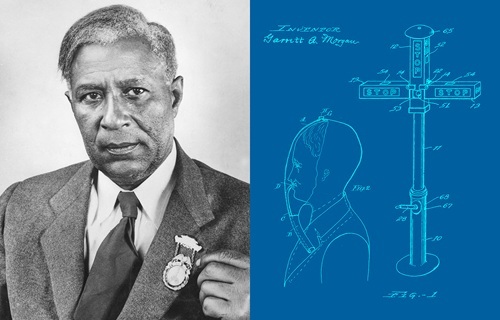
Title I is a federally funded program that provides financial assistance and support to schools with high numbers of students from low-income families, NCDOT noted.
The agency added that participants in this program will engage with NCDOT professionals, enjoy hands-on activities, ride a state train, and learn about transportation planning, environmental analysis, public transit and public safety.
“[We are] committed to fostering the next generation of leaders in transportation,” said Christy Dunston, director of the NCDOT’s Office of Historically Black Colleges and Universities or HBCU Outreach, in a statement.
“The Garrett A. Morgan Page Program not only honors an important figure in our history but also empowers students by providing them with valuable insights and experiences that can shape their future careers,” Dunston said.
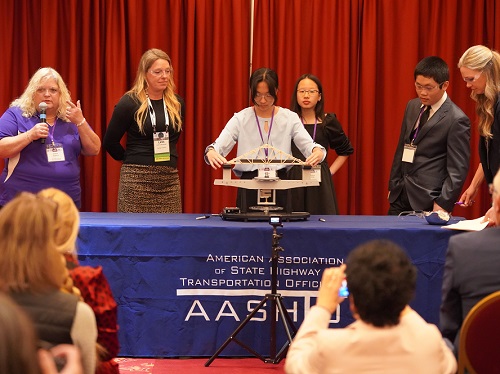
[Editor’s note: The American Association of State Highway and Transportation Officials offers the AASHTO STEM Outreach Solutions program to promote an interest in science, technology, engineering, and math or STEM disciplines among middle and high school students; a program that includes the annual AASHTO Bridge Challenge competition.]
State departments of transportation are involved in a wide array of career outreach efforts to high school students.
For example, in September 2024, the Hawaii Department of Transportation held its 16th annual “Hawaii Construction Career Days” event for middle and high school students at Aloha Stadium in Honolulu.
The agency said its yearly “Construction Career Days” event aims to provide students a “practical and valuable” firsthand look at career and educational opportunities available in Hawaii’s construction industry.
“Our department is happy to give back to our community,” explained Ed Sniffen, director of the Hawaii DOT, at the time. “Our young people will be able to see the wide range of jobs available in the construction field. This is a chance for us to reach out to our future leaders to keep Hawaii’s construction industry thriving and strong.”
And in August 2024, the North Dakota Department of Transportation launched a new science, technology, engineering, and math or STEM education program aimed at promoting interest in transportation careers to high school students; an initiative based on the aforementioned AASHTO STEM Outreach Solutions program.
The program’s hands-on activities introduce students to the work of transportation and civil engineering, with the aim to inspire them to consider careers in those fields, the agency said at the time.