In mid-November, the Ohio Department of Transportation issued $13.5 million to fund 28 public transit projects through its Ohio Workforce Mobility Partnership Program or OWMP.
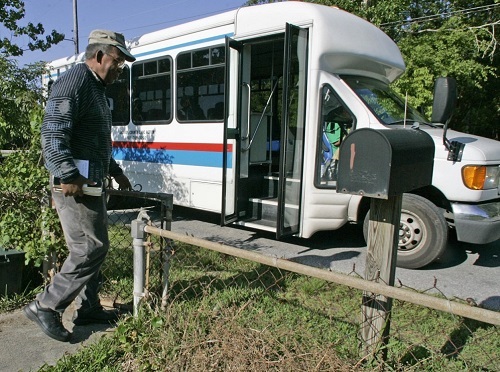
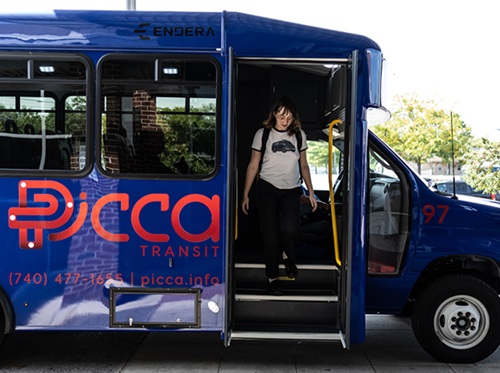
[Above photo by Ohio DOT]
A total of 15 transit agencies across 16 counties are receiving funding through this disbursement, the agency said.
Reestablished in House Bill 54, the OWMP directs federal funding through the state transportation budget to projects that support workforce transportation by connecting residents to economically significant employment centers, bridge service gaps between rural and urban transit authorities, and enhance mobility for residents in areas with limited or no public transit access.
Ohio DOT noted that legislation makes $13.5 million available in fiscal years 2026 and 2027 for the OWMP.
“Transportation should never stand in the way of a good job,” said Governor Mike DeWine (R) in a statement. “This investment will help more Ohioans get to work and support employers who need reliable, skilled workers.”
“The Workforce Mobility Program is a great tool that helps Ohio DOT deliver on its mission to ensure every Ohioan has access to transportation opportunities, regardless of whether they own a vehicle,” said Pam Boratyn, Ohio DOT’s director.
Across the country, state departments of transportation support transit in a wide variety of ways.
For example, the Maryland Department of Transportation recently unveiled its latest rewards initiative to entice Baltimore region residents to try transit. The “Ride Together Rewards” Baltimore transit incentives program launched November 1 and aims to help new transit users and employers take advantage of services offered by the Maryland Transit Administration or MTA – including local bus, Metro subway, light rail, commuter bus and Maryland Area Rail Commuter or MARC train services.
And, in July, the Colorado Department of Transportation celebrated the 10-year anniversary of its Bustang interregional passenger express bus service. Annual Bustang ridership has more than tripled over its decade-long existence, the agency noted; growing to 351,000 passenger trips.
To further serve this fast-growing ridership, Colorado DOT has been building mobility hubs along major highway corridors to more quickly and conveniently connect riders with local amenities and their next Bustang ride.