
Caltrans Awards $23.6M Worth of Planning Grants

The California Department of Transportation recently awarded $23.6 million in planning grants to 58 local projects statewide – projects focused on improving infrastructure resiliency, reducing greenhouse gas emissions, improving bicycle and pedestrian safety, and increasing natural disaster preparedness throughout California.

[Above photo by Caltrans]

The agency said that funding is split between two types of grants. First, $20.4 million worth of Sustainable Communities Competitive and Technical Grants will help support 49 local and regional projects sponsored by transit agencies and tribes for transportation and land use planning, as well as planning for electric vehicle charging infrastructure.

Second, $3.2 million worth of federally funded Strategic Partnerships Grants will support nine projects focused on planning for long-term multimodal transportation needs. That includes creating a statewide transportation resource library as well as railroad corridor crossing safety projects, multimodal circulation and intersection improvements, transit connectivity and service reliability initiatives, a comprehensive transit fare analysis study, plus short- and long-range Bus Rapid Transit planning needs.

Nearly $14 million of that funding comes from Senate Bill (SB) 1, also known as the Road Repair and Accountability Act of 2017, Caltrans said. The remaining funds are a combination of the State Highway Account, the Federal Highway Administration’s State Planning and Research program and the Federal Transit Administration’s Section 5304 grant program, the agency noted.

“These planning grants will support local leaders and residents in designing transportation solutions that improve quality of life and help make safer connections to community assets, schools and workplaces,” said Toks Omishakin, secretary of the California State Transportation Agency, in a statement.

“By planning for climate-resilient infrastructure, improving access to walking and biking options and supporting under-resourced areas, these projects will help protect people, expand opportunity and build a transportation system that serves everyone,” added Dina El-Tawansy, director of Caltrans.

Caltrans noted that it awards transportation planning grants each year through a competitive process to encourage local and regional projects. Applications are evaluated on how projects advance state transportation and climate goals by identifying and addressing statewide, interregional, or regional transportation deficiencies on the highway system, the agency said.

Since this program began during California’s 2015-2016 fiscal year, more than 800 planning grants have been awarded totaling $316 million, Caltrans said – with more than 73 percent of those projects now fully completed.
Environmental News Highlights – May 27, 2026

Maine DOT Officially Opens Acadia Gateway Center

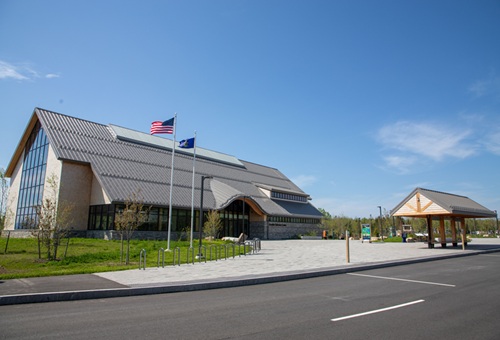
The Maine Department of Transportation hosted an event on May 20 to celebrate the grand opening of the 11,000-square-foot Acadia Gateway Center; a multimodal visitor services hub located in Trenton, ME, designed to improve access to Acadia National Park and Downeast Maine while helping reduce congestion on Mount Desert Island.

[Above photo by the Maine DOT]

The $27.7 million Acadia Gateway Center – funded through a partnership that included the Federal Transit Administration, the Maine DOT, the National Park Service, and Friends of Acadia – features 300 free day-use parking spaces, including 18 electric vehicle charging stations and 10 oversized vehicle spaces. It also serves as a hub for Island Explorer buses and commercial tour operators.

Photo by Maine DOT

The center represents the culmination of a multi-phase transportation strategy first developed more than two decades ago to improve mobility and reduce traffic impacts associated with travel to Mount Desert Island and Acadia National Park. 

“The Gateway is expected to be used by nearly 300,000 visitors who, last year, supported more than 14,000 jobs and contributed more than $610 million in wages in this region alone,” said Governor Janet Mills (D) in a statement. “This facility will safeguard Acadia National Park as the treasure that it has always been by making the visitor experience smoother, more accessible, and more sustainable.”

“The Acadia Gateway Center represents years of collaboration and a shared commitment to improving the visitor experience while protecting one of Maine’s most treasured destinations,” added Dale Doughty, Maine DOT’s commissioner. “This facility creates a welcoming first stop for visitors, strengthens transportation connections throughout the region, and helps support the long-term sustainability of Acadia National Park and surrounding communities.”

“We are deeply grateful to the donors whose generosity helped bring this vision to life,” said Eric Stiles, president and CEO of Friends of Acadia. “By making it easier to park, ride the bus, and explore Acadia car-free, the Acadia Gateway Center will help reduce traffic congestion in the park and surrounding communities, protect park resources, and create a more enjoyable visitor experience.”

California Allocates $540M for Transportation Investments

The California Transportation Commission recently allocated roughly $540 million in transportation investments to improve travel times, shore up aging bridges and freight infrastructure, and add new layers of safety around schools and community centers.

[Above photo by Caltrans]

Guided by the state’s “Build More, Faster – For All” initiative, that funding also supports investment into alternative-fuel transit options.

The California Department of Transportation – known as Caltrans – noted that funding total includes $152 million from the federal Infrastructure Investment and Jobs Act or IIJA and $253 million from Senate Bill 1 or SB 1, officially called the Road Repair and Accountability Act of 2017.

The remaining $135 million comes from the State Highway Account, the state’s general fund, as well as other state and federal transportation programs, Caltrans noted.

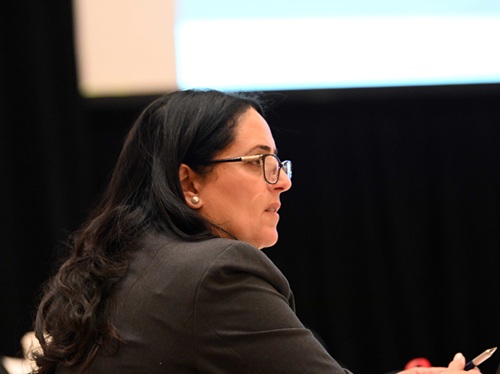
Dina El-Tawansy. Photo by AASHTO.

“The support made possible by these forward-thinking investments will help Caltrans increase sustainability, maintain safer and more connected bridges and roadways and bolsters our efforts to counter the effects of extreme weather on critical transportation assets,” noted Dina El-Tawansy, director of Caltrans, in a statement.

The single largest proposal funded by this allocation is a $117.8 million project to replace the fender system on the West Span of the San Francisco-Oakland Bay Bridge.

Caltrans noted that bridge fenders are structures installed around bridge piers or towers that provide an extra level of advanced security in the event of an accidental ship collision by absorbing the impact before hitting the bridge.

That funding tranche also includes $53 million to complete a communication-based train control system for San Francisco’s Bay Area Rapid Transit or BART system; nearly $70 million to address weather-related highway repairs statewide; and $6.7 million to create a pedestrian priority area with new sidewalks in downtown Long Beach.

Environmental News Highlights – May 20, 2026

DDOT, Amazon Launch E-Cargo Bike Pilot Project

The District of Columbia’s Department of Transportation (DDOT) in partnership with Amazon has launched a new pilot project to support e-cargo bike package delivery in Washington, D.C.

[Above photo by DDOT]

During the 10-month pilot, Delivery Service Partners or DSPs will deliver Amazon packages to customers in Washington, D.C., using a fleet of up to 15 battery-powered e-cargo bikes equipped with a secure rear cargo hold, along with covered seating, a windshield, and windshield wipers, providing weather protection for DSP delivery associates, noted DDOT.

All e-cargo bikes are limited to a 15-mph maximum speed and restricted from traveling on sidewalks, the agency added.

The results of the pilot will be used to inform additional efforts to reduce impacts from last-mile delivery and future operational parameters for e-cargo bikes as needed, noted Sharon Kershbaum, DDOT’s director.

“By using e-cargo bikes to deliver packages, the District demonstrates a commitment to reducing traffic and piloting innovative delivery solutions,” she said in a statement. “DDOT is excited to collaborate with Amazon to adapt to a changing urban freight landscape.”

Located on a secure surface parking lot in southwestern Washington, D.C., Amazon’s “microhub” will provide package storage and a loading zone to support DSP deployment of e-cargo bikes for deliveries to nearby District neighborhoods.

Amazon said e-cargo bikes are a “compelling solution” for urban areas, where deliveries are located closer together. By shifting last-

mile deliveries from larger vehicles to e-cargo bikes that can use daylighting and commercial loading zones while also operating in bike lanes, packages can be delivered more efficiently while helping reduce traffic and noise.

“We’ve seen the benefits e-cargo bikes bring to urban deliveries around the world, and we’re excited to launch this pilot alongside DDOT to help ensure we get it right here in DC,” said Dave Alperson, Amazon’s vice president of North America last-mile transportation.

“We’ll continue working alongside community partners in the National Capital Region who understand the local needs best – combining their insights with our expertise in delivery, technology, and innovation to make a real difference in people’s everyday lives,” he said.

DDOT said this pilot program builds on earlier efforts and investments from the Transportation Planning Board (TPB) and the Carbon Neutral Cities Alliance and its 2023 Delivery Microhub Feasibility Report, developed with technical assistance from Nelson/Nygaard through the TPB’s Transportation Land-Use Connections program.

Grant funding from the Carbon Neutral Cities Alliance is supporting Nelson/Nygaard’s monitoring and evaluation of the 10-month pilot for DDOT. Monthly data collection and assessment, including the number of trips to the microhub, route distances traveled by e-cargo bikes, and the number of packages delivered, will help DDOT identify further opportunities for safe and more efficient deliveries across Washington, D.C.

Virginia DOT Issues Statewide Multiuse Trails Plan

The Virginia Department of Transportation recently released a revised Statewide Multiuse Trails Plan, providing a foundation for the development of a connected trail network for the Commonwealth.

[Above photo by VDOT]

The plan – a culmination of over two years of research – combined public engagement and technical analyses, including a data inventory of over 1,500 current and 2,900 planned miles of trails across Virginia, plus spatial analyses and practical insights for local jurisdictions.

VDOT estimates that full implementation of its trails plan could increase the portion of Virginians living within a half mile of a trail to 50 percent. That compares to 36 percent of all residents now currently living within a half mile of an existing trail. For underserved communities, the number cut nearly in half to 19 percent, VDOT said.

“The actions laid out in the plan support the commonwealth’s vision of a multimodal trail system that enhances connectivity, promotes equitable access, and improves quality of life for all Virginians,” noted Angel Deem, VDOT’s chief of policy, in a statement.

Alongside the release of the trail plan, VDOT’s State Trails Office launched the Resource Hub, designed to lead decision making and continue effective implementation.

Many state departments of transportation are developing trail systems for their respective regions. For example, the Utah Department of Transportation recently kicked off construction on the first project within the Utah Trail Network; a plan to build 2,600 miles of new paved trails and 500 miles of existing trails connecting communities statewide similar to how highways connect cities.

Meanwhile, in September 2025, the Maryland Department of Transportation unveiled its own statewide strategic plan to map out a “safe, accessible, and connected trail network” for communities across Maryland; a plan that reflects the state’s “broader commitment” to safety, equity, and multimodal transportation in support of both its Complete Streets Policy and Serious About Safety initiative.

Environmental News Highlights – May 13, 2026

PennDOT Unveils ‘EVs in Focus’ Video Series

This spring, the Pennsylvania Department of Transportation rolled out short, informational videos as part of its new “EVs in Focus” video series, which addresses questions regarding electric vehicles or EVs.

[Above photo by PennDOT]

PennDOT said this video series offers “reliable information from independent experts” and is designed to “bring better awareness and understanding to the general public” about complex EV issues.

Some of the questions and concerns PennDOT addresses in this new series include the risk of EV battery fires (see below), the impact of EV charging on the electric grid, and the environmental benefits of EVs.

The agency said it developed this informational video series after state residents raised questions about EVs at meetings PennDOT hosted regarding the construction of public EV charging stations – projects supported by the federal National Electric Vehicle Infrastructure or NEVI formula program.

That program issued PennDOT $171.5 million in dedicated formula funding to help build up the state’s EV charging infrastructure.

WSDOT Crews Collect Litter on Earth Day

In honor of Earth Day, employees and maintenance crews with the Washington State Department of Transportation spent a week picking up trash along highways across Clark County, the southernmost county in Washington State.

[Above photo by WSDOT]

Along several stretches of I-5, I-205, State Route 14, SR 500 and SR 503, some 49 members of WSDOT staff joined agency maintenance crews and volunteers from agency partners to remove food wrappers, cigarette butts, bottles, cans, and other types of litter; removing 3,410 pounds of trash.

“This effort is one way we can help take care of our state, protect the environment and keep roads clear for travelers,” said Denise Perez, a WSDOT lab testing technician, in a statement. “Keeping our highways clean is a shared responsibility … and we encourage the public to do their part everyday by keeping trash off the roads in the first place.”

WSDOT noted that it does not have dedicated litter crews. During routine maintenance work such as guardrail repairs, drainage clearing, and pothole patching, the agency said its crews also remove debris from the roadside.

Because litter can create safety issues, WSDOT said its crews prioritize work that keeps roads open and safe, focusing first on larger hazards like furniture or bags of garbage from unsecured loads or illegal dumping. It also relies on volunteers and programs like Adopt-A-Highway to help keep roads clean, the agency said.