FHWA Issues $635M in Electric Vehicle Charger Grants
The Federal Highway Administration issued $635 million in grants this week to 49 projects that support the ongoing effort to build out a national electric vehicle or EV charging and alternative fueling network.
The agency noted in a statement that $368 million of those grant funds will be allocated for 42 “community” projects that expand EV charging infrastructure in their respective locations, while $268 million will go towards seven “corridor” fast-charging projects that support a national charging and alternative-fueling network along designated Alternative Fuel Corridors.
Those grants – which support both electric charging and hydrogen refueling infrastructure – also dovetail with the U.S. Department of Transportation’s National Zero-Emission Freight Corridor Strategy that seeks to reduce freight-related carbon emissions.
Several state department of transportation projects received funding from this latest round of grant awards:
The Maryland Department of Transportation – in partnership with the Pennsylvania Department of Transportation, the New Jersey Department of Environmental Protection, and the West Virginia Department of Transportation – will receive $18.6 million to deploy alternative fueling infrastructure along the I-81 and I-78 corridors across Maryland, Pennsylvania, New Jersey, and West Virginia. The project includes a plan to analyze medium and heavy-duty vehicle charging/fueling deployment, as well as the installation of six fast charging stations in locations that will serve local fleet needs and build out connections to a regional network of freight truck charging infrastructure.
The Massachusetts Department of Transportation will receive $14.4 million to install 472 EV charging ports, providing accessible charging for multi-modal transit trips and prioritizing disadvantaged communities near dense multi-family housing areas. The project addresses the lack of charging options for residents in multi-family dwellings, and includes education, workforce training, and community outreach.
The New Hampshire Department of Transportation will receive $15 million for a project to enhance public EV charging infrastructure across the state. The project will cover both urban and rural areas, aiming to improve access to EV charging across nine regions in the state. In total, the project will install 199 EV charging ports.
MassDOT Added 15 Miles of Shared Use Paths in 2024
The Massachusetts Department of Transportation added roughly 15 miles of new shared use paths in 2024; expanding multimodal connectivity and opportunities for recreation statewide while also enhancing pedestrian and bicyclist safety.
[Above image by MassDOT]
The 15 miles of new shared paths that opened in 2024 were the result of completed projects, either constructed by MassDOT or jointly funded through the MassTrails program, along 14 different trails statewide.
The agency added that, throughout the course of 2024, it also completed several roadway projects that added new bike lanes, sidewalks, shared use paths, and crosswalks.
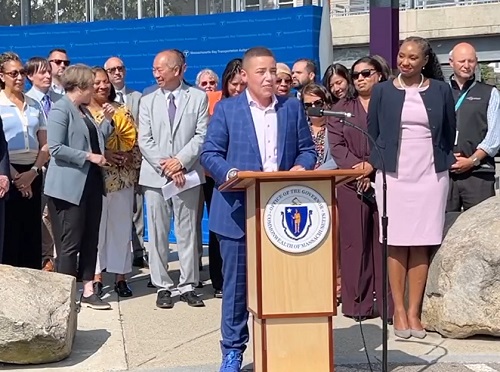
Monica Tibbits-Nutt at podium. Photo by MassDOT.
“Whether they are used for recreation or commuting to work, our multimodal paths play a vital role in making our transportation network cleaner, safer, and more inclusive,” noted Monica Tibbits-Nutt, MassDOT secretary and CEO, in a statement. “We are proud of the numerous tools and funding programs that we have put in place to keep fortifying our infrastructure in ways that benefit pedestrians and bicyclists across Massachusetts.”
“With these new routes, we are transforming how people move through their communities – offering pedestrians and cyclists safe, healthy, and sustainable ways to reach their destinations while actively contributing to Massachusetts’ ambitious climate goals,” added MassDOT Highway Administrator Jonathan Gulliver.
“This progress would not be possible without the vision and collaboration of stakeholders and community leaders, whose insights have been invaluable in creating a more connected and inclusive transportation network for all,” he said.
“Shared use paths provide the kind of connectivity that can foster better human interactions and revitalize communities,” pointed out Peter Sutton, bicycle and pedestrian coordinator at MassDOT.
“By removing barriers to walking and biking and making our roadways safer for all users, we are creating a more equitable transportation network for future generations of Massachusetts residents,” he said.
MassDOT also plans to soon launch its Next Generation Bicycle and Pedestrian Vision Map; an initiative that will play a significant role in making walking and biking a more viable option for residents.
The agency said the development of this project has helped it identify “physical and quality gaps” when it comes to statewide multimodal connectivity, and this information will provide a roadmap for targeted multimodal investments in the future – supporting the strategy articulated in MassDOT’s “Beyond Mobility 2050” plan finalized in August 2024.
FHWA Issues Active Transportation Infrastructure Grants
The Federal Highway Administration recently issued $44.5 million in grants to 14 projects in 13 states and Puerto Rico via its Active Transportation Infrastructure Investment Program or ATIIP.
[Above image by FHWA]
The agency noted in a statement that ATIIP grants aim to support the planning, design, and construction of connected networks that lead to destinations and make communities safer for bicyclists and pedestrians while increasing access to public transit.
FHWA said state agencies, local and tribal governments, plus metropolitan and regional planning organizations can use ATIIP grants to plan, design, or construct safe and connected active transportation networks such as sidewalks, bikeways, and trails that connect schools, workplaces, transit, and other destinations within a community or metropolitan region.
Grants can also be used for projects to plan, design, and construct routes known as “transportation spines” that serve as backbones to connect two or more communities, metropolitan regions, or states.
Among the projects receiving grants via this round of ATIIP disbursements, the Puerto Rico Department of Transportation and Public Works received $2 million for its La Vereda Planning and Design project.
That project seeks to construct an active transportation network in the Hato Rey neighborhood of San Juan, which will include pedestrian and non-motorized connections linking jobs, schools, services, and recreational facilities to each other and the Tren Urbano rail system.
Environmental News Highlights – January 8, 2025
WSDOT Wrapping Up Purdy Creek Fish Passage Project
The Washington State Department of Transportation is putting the finishing touches on a two-year fish passage project at Purdy Creek near Gig Harbor along State Route 16, which will help salmon migrate to spawning areas with greater ease.
[Above photo by WSDOT]
The agency noted in a statement that its fish passage work improves or replaces areas where roads and culverts hamper fish moving through waterways across the state.
This project is part of WSDOT’s extensive work to remove barriers to fish as part of federal court order issued in 2013; work that entails removing state-owned culverts that block habitat for salmon and steelhead fish species, allowing them to pass more freely through waterways to breeding areas, by 2030.
The agency noted that major work wrapped at the Purdy Creek project site in late 2024, with agency work crews observing in October and November pink and chum salmon in the creek near State Route16. Those crews are currently completing landscaping work at the site, WSDOT said; work that includes placing native plants along the stream to provide important nutrients into the ecosystem.
The department noted that the Purdy Creek project rebuilt the streambed under State Route 16; work that included realigning the stream, building a new embankment, and adding large tree trunks to the stream to provide refuge and resting areas for the fish.
The project also included a new bridge on State Route 302 Spur/Purdy Drive that was built in 2023 to replace a second culvert in the creek.
Federal Funds Help Nebraska Align Transportation Projects
The Nebraska Department of Transportation and the Omaha-Council Bluffs Metropolitan Area Planning Agency, known as MAPA, recently received a $2 million grant from the Federal Highway Administration to launch the “Transformative Regional Investment Prioritization System” or TRIPS to better align transportation projects with community needs.
[Above photo of Nebraska DOT’s Vicki Kramer by Nebraska DOT]
The Nebraska DOT said that the TRIPS program will change how transportation projects are “selected and prioritized” in the Omaha region; using a four-tiered assessment process to create a “transparent and equitable decision-making framework” to ensure those projects align with regional priorities and address the needs of the community for generations to come.
The agency added that the TRIPS program will also emphasize enhanced public engagement, empowering local communities to have direct influence on the region’s transportation future, with Nebraska DOT providing technical expertise and resources to ensure the program is successful.
“We are excited to collaborate with MAPA on this important project,” noted Vicki Kramer, Nebraska DOT director, in a statement. “TRIPS will help us make informed decisions that improve Nebraska’s transportation system and enhance residents’ quality of life.”
Several state departments of transportation have entered into similar partnerships in recent years to better align a variety of infrastructure projects with regional and/or local needs.
For example, in October 2024, the Maryland Department of Transportation in partnership with the Maryland Economic Development Corporation or MEDCO recently launched a new joint strategy to spur development along the Maryland Area Rail Commuter or MARC Penn Line; laying out a vision for denser, mixed-use communities around transit hubs between Washington and Baltimore.
The agency said this new transit-oriented development or TOD plan provides a “blueprint” for unlocking economic opportunities at six train stops within the MARC’s Penn Line corridor. The plan offers the potential to create at least 2,600 new housing units, generate some $1.7 billion in annual retail sales, and yield more than $800 million in tax revenue for the state over the next 30 years.
Environmental News Highlights – January 2, 2025
Oregon DOT to Build First I-5 Wildlife ‘Overcrossing’
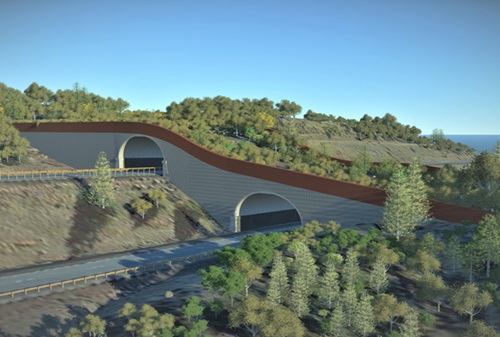
The Oregon Department of Transportation plans to build the first wildlife overcrossing of Interstate 5 in the wildlife-rich Mariposa Preserve in the Cascade Siskiyou National Monument, thanks to a $33.2 million federal grant.
[Above photo by Oregon DOT]
The agency said it has been planning the crossing for years to help reduce vehicle-wildlife collisions. Now, with the help of a grant from the Federal Highway Administration, the Oregon DOT can move to the environmental stage of the project, noted agency spokeswoman Julie Denney.
Image via Oregon DOT
“We have completed the design, and we are scheduled to begin construction in the 2028 construction year,” she said; noting that the agency will be contributing $3.8 million to this project.
“With this significant investment of federal funding, [we] can now provide a new connection for wildlife in an ecologically diverse area,” added Oregon DOT Director Kris Strickler in a statement. “This will improve safety for drivers on I-5 by reducing wildlife collisions. I want to thank our federal partners for making this project possible by fully funding ODOT’s grant request.”
The crossing will be about two miles north of the California border; a mountainous area inhabited by elk, deer, bear, and mountain lions. Existing culverts and areas under bridges on I-5 were poor candidates for development as wildlife underpasses, so Oregon DOT said it opted for an overcrossing, the state’s first such project.
“We’ve had successes with wildlife underpasses, most of which are in central Oregon along U.S. 97,” Denney noted. In those areas, she explained, “it’s much easier to tunnel beneath a highway there than it is in the mountains, which is a lot of rock.”
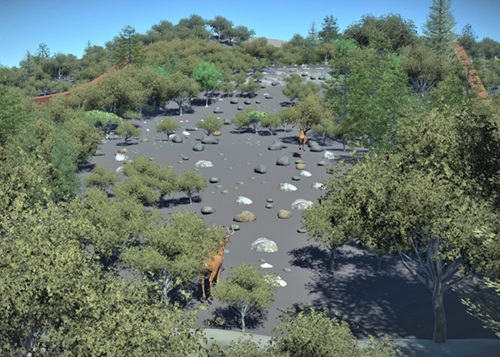
Image via Oregon DOT
There are about 6,000 vehicle-wildlife collisions each year on Oregon roads, the agency noted, and underpass wildlife crossings in Oregon have reduced those collisions in those areas by 86 percent; saving not only the animals, but significant money for the vehicle owners.
According to Oregon DOT, a collision with a deer can cost about $9,000; a run-in with full-sized elk can cost $24,000 in repair costs, towing, and medical expenses.
The I-5 crossing will be designed to resemble the natural surroundings, with trees, rocks and animal trails, according to an artistic rendition. Along each side of I-5, the project will include several miles of north-south fencing to funnel the wildlife to the crossing.
“We are excited about this project,” Denney said. “We feel we are catching up with other states and countries on crossings to protect these animals.”
ODOT worked with the Southern Oregon Wildlife Crossing Coalition, a group of governmental, nonprofit and tribal partners, that supported the wildlife crossing. The coalition produced a video about the crossing last year.
The grant to Oregon DOT was one of several the FHWA issued to state departments of transportation via its Wildlife Crossings Pilot Program in December 2024; a program funded by the Infrastructure Investment and Jobs Act of 2021. Other state DOTs that received grants include:
$626,659 to the Alaska Department of Transportation and Public Facilities to conduct a study that will develop a comprehensive solution to preventing vehicle collisions with moose along Glenn Highway; the state’s busiest highway.
$565,800 to the Arizona Department of Transportation to develop an online Geographic Information System or GIS mapping tool that will help identify wildlife-vehicle collision hotspots, analyze data about collisions, identify wildlife corridors for habitat connectivity, develop and prioritize projects, and build cost estimates to support future wildlife mitigation projects.
$6.1 million to the Florida Department of Transportation for a wildlife crossing and fencing along US-27 in southern Highlands County near the community of Venus.
$2.2 million to the Georgia Department of Transportation to develop an institutional framework that will integrate wildlife-vehicle reduction measures and habitat connectivity goals into transportation project planning and construction.
$21 million to the Idaho Transportation Department for three wildlife underpasses with eight-foot-tall fencing along six miles of US-30 at Rocky Point in rural Bear Lake County.
$9.3 million to the Maine Department of Transportation for a wildlife crossing using a pre-cast concrete arch culvert to provide passage for moose, deer, and other large wildlife in the city of Caribou.
$387,424 to the Maryland State Highway Administration – a division of the Maryland Department of Transportation – to develop a comprehensive plan designed to reduce wildlife-vehicle collisions statewide.
$1.7 million to the Massachusetts Department of Transportation to fund pre-construction design and permitting for a wildlife crossing project along the Appalachian Trail over Interstate 90 through western Massachusetts.
$467,376 to the Michigan Department of Transportation to collect ecological and transportation data needed to identify roadways that present the greatest risk to motorists and wildlife.
$900,000 to the Missouri Department of Transportation to design and construct multiple wildlife vehicle mitigation projects along Interstate 70 and Interstate 64.
$424,242 to the Montana Department of Transportation to study and develop plans to reduce wildlife vehicle collisions along 30 miles of US-93 from the Idaho border to Darby, MT.
$16.8 million to the Nevada Department of Transportation to build 61 wildlife crossings along US-93 and install 68 miles of barrier fencing aimed at reducing wildlife-vehicle collisions while connecting critical habitat for the federally- threatened Mojave Desert tortoise.
$323,850 to the New York State Department of Transportation to conduct a two-phase study about wildlife-vehicle collisions and ways to improve habitat connectivity.
$25 million to the North Carolina Department of Transportation for multiple wildlife underpass structures and fencing along US-64 in the Alligator River National Wildlife Refuge in Dare County.
In 2023, the FHWA issued $110 million in grants via the first round of disbursements through this program to 19 wildlife crossing projects in 17 states, including four projects overseen by Native American tribes.
State DOTs Kick Off Youth-Focused Litter Campaigns
The Missouri Department of Transportation (MoDOT) and Oklahoma Department of Transportation recently initiated litter prevention campaigns targeted at elementary through high school students.
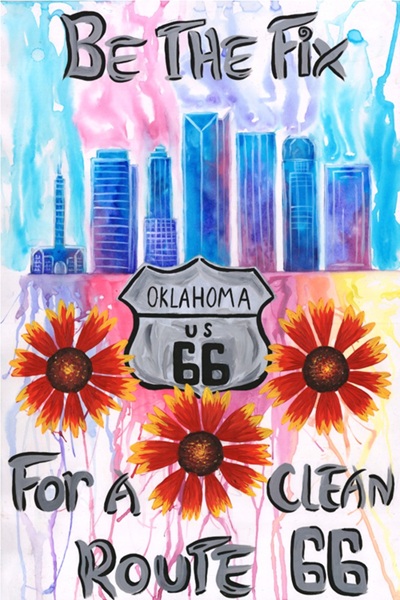
[Above image via Oklahoma DOT]
MoDOT began encouraging students statewide in kindergarten through 12th to participate in the agency’s 2025 “Yes You CAN Make Missouri Litter-Free” trash-can-decorating contest. The contest is part of MoDOT’s annual “No MOre Trash!” statewide litter campaign, which will be held in April.
Image via MoDOT
The contest – which requires no entry free – encourages school-aged kids to join in the fight against litter by decorating a large trash can with the “No MOre Trash!” logo and a litter prevention message using a variety of creative materials. The agency said in a statement that schools, or home school programs, may submit one trash can entry in each competition category: grades K-2, 3-5, 6-8 and 9-12.
MoDOT said that participating school groups must submit a completed entry form online with up to three photos and a release form by March 14.
Entries are judged based on creativity, adherence to the contest rules and effective use of the theme and logo, MoDOT noted, with first-place winners from each competition category receiving a $200 award for the sponsoring schools. All first-place winners are then eligible for a grand prize of $600 and a trophy awarded to the sponsoring school, the agency added.
Image via OKDOT
Meanwhile, the Oklahoma DOT recently kicked off its statewide Trash Poster Calendar contest, where winning artwork from kindergarten through 12th grade students will be included in the agency’s 2026 Oklahoma Trash Poster Calendar.
The agency said in a statement that its annual calendar showcases 14 student creations that promote litter reduction, especially along state highways.
Those winners will be rewarded with cash prizes: $300 for first place, $300 for the State Promotional Poster of the Year, $200 for second place, $200 for the Contest Entry Form Poster, and $150 for third place in each of the four grade divisions.
Students can enter in one of four categories based on their grade – K-2nd, 3rd-5th, 6th-8th, and 9th-12th – and must submit entries by January 31, 2026, to their local county Department of Environmental Quality office.
Local judging will take place in February or 2026 and winning entries will advance to the state competition in March 2026.